



Stump Grinding in Marietta, GA: What to Expect and How to Hire
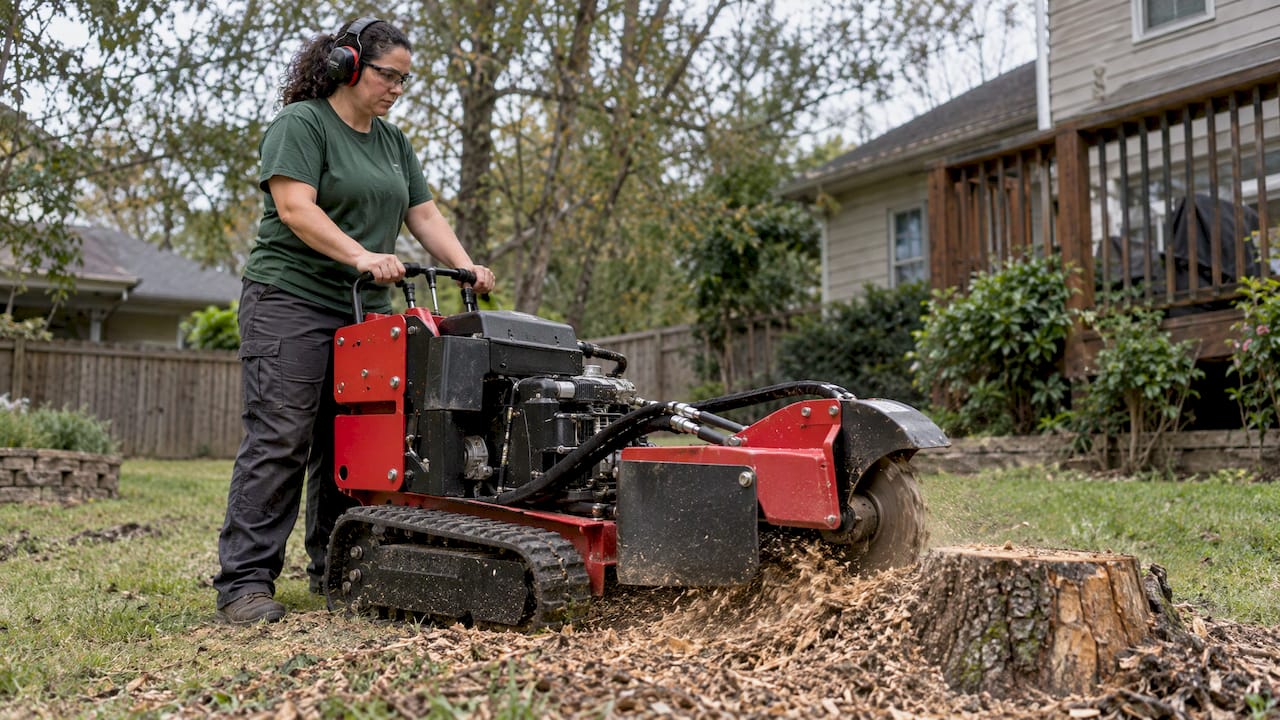
If you have a stump in your Marietta yard, the fastest way to get rid of it is to hire a crew that grinds it below grade with its own machine, hauls or leaves the chips as you prefer, and finishes with a full cleanup. R & R Tree Service is a family owned company in Buford that has served North Georgia since 1987. Our own crew handles stump grinding with company-owned equipment and no subcontractors, from the first quote to the final raking. This guide explains what the work involves, what shapes the estimate, and what to plan for afterward.
TL;DR
- Stump grinding shreds the stump into chips below ground level. It does not pull out the whole root system, and that is usually what makes it the practical choice for a yard.
- Estimates depend on stump size, wood condition, access, number of stumps and how much chip cleanup you want. A crew should look at the site before quoting.
- Call 811 before any digging job in Georgia so buried lines are marked for free. A professional crew plans around marked lines and buried obstacles.
- Do not plant a new tree into a hole filled only with wood chips. Plan the replanting before the grinder arrives.
- R & R Tree Service is licensed, bonded and insured. Request a stump grinding quote and we will talk through your yard.
Table of Contents
- What stump grinding actually involves
- What shapes a stump grinding estimate in Marietta
- Before the crew arrives: safety and site prep
- What happens to the stump, roots and wood chips
- How long does the job take?
- Timing it with other work
- Restoring the area afterward
- Is the stump worth grinding right now?
- Why hire a crew that owns its equipment
- Perspective
- Get your stump ground
- FAQ
- Sources
What stump grinding actually involves
A stump grinder is a machine with a spinning cutting wheel fitted with carbide teeth. The operator sweeps the wheel back and forth across the top of the stump and lowers it a little with each pass. The wood turns to chips, and the stump disappears down to a set depth below the soil line.
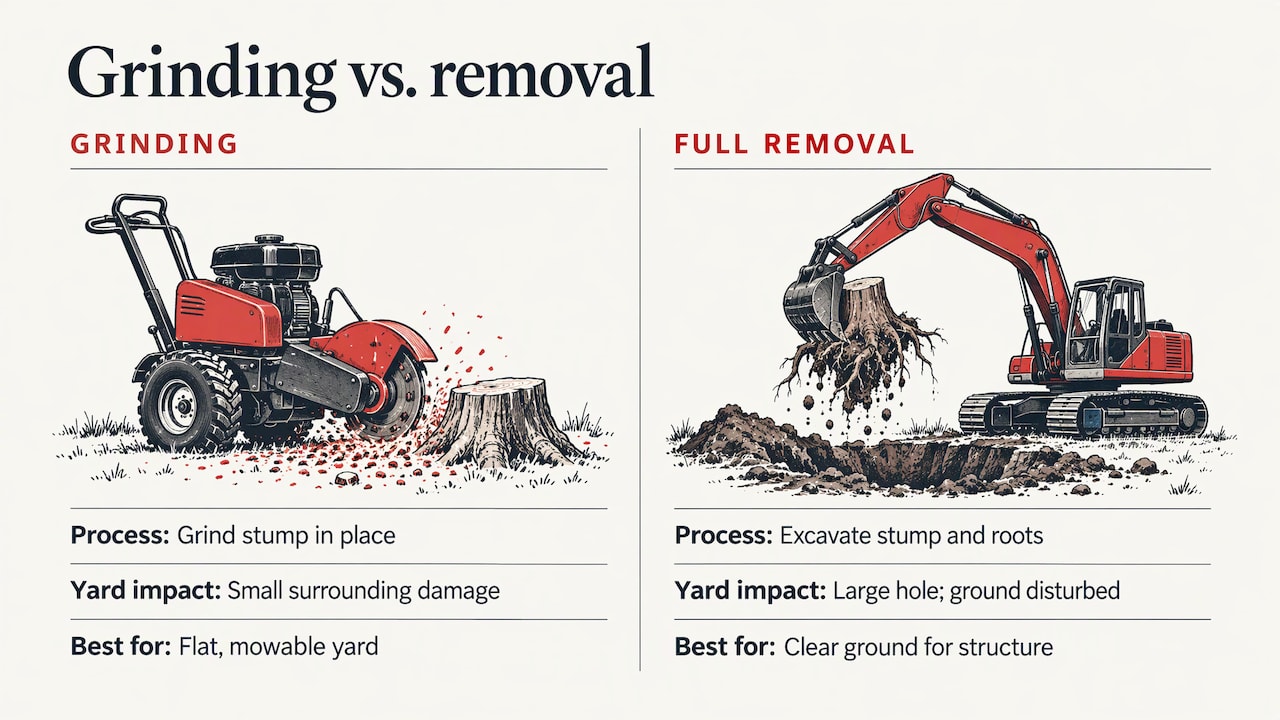
That is the whole idea, and it is why grinding is the usual answer for stumps in lawns, along fences, beside driveways and near foundations. Digging a stump out leaves a crater and tears up the ground around it. Grinding works in place, so the damage to the surrounding yard stays small.
The result is not a bare hole. What remains is a pile of mulch-like chips sitting in the space where the stump was, with the deeper roots left in the ground to decay. If you want the longer explanation, our page on what stump grinding is walks through the process in plain terms.
Grinding versus full removal
Full stump removal means excavating the stump and as much of the root ball as can be reached. It takes heavy digging, leaves a large hole to backfill and can disturb irrigation lines, sod and nearby roots. Grinding is quicker and tidier. Removal is the right call when the ground has to be cleared completely, for example before a pool, a foundation or a new structure sits where the stump was. We compare the two side by side in stump grinding vs. stump removal, so you can match the method to what you plan to build or plant.
Most Marietta homeowners want a flat, mowable yard again, a safe place for kids and pets, and an end to tripping over a stump. For that, grinding does the job.
What shapes a stump grinding estimate in Marietta
Prices vary by site, so any honest quote starts with a look at the stump and the way in. These are the factors that move an estimate up or down.
Stump diameter. Width at the widest point is the biggest factor, because more wood means more machine time. A 10-inch stump from a small ornamental is a different job than a 36-inch oak that stood in the front yard for decades.
Height and root flare. Large roots that flare out above ground add wood to grind. A stump cut low is quicker than one left knee-high.
Wood and condition. Dense hardwood common around Marietta, such as oak and hickory, takes longer than a soft, rotted stump. A stump that has been sitting for years may be softer, but it can also hide rocks, nails or old fencing in the wood.
Access. A stump in an open front yard is simple. A stump behind a fence gate, on a slope or beside a retaining wall may need a smaller machine or extra setup. Tell us about gate widths and steps when you call.
Number of stumps. Several stumps on one visit usually make the trip more efficient than a single stump on its own.
Depth and the finished grade. Grinding six inches down is enough for sod. If you plan to plant a tree or build a bed, you may want it deeper. Tell the estimator the plan.
Chip cleanup. One stump can produce a surprisingly large pile. Decide whether you want chips left for mulch, spread, or hauled away.
We do not publish a flat price, because the factors above change the job too much. A short phone call and a few photos usually get the conversation started, and a site visit settles the figure. Use our stump grinding page to start a quote request.
Before the crew arrives: safety and site prep
The grinder throws chips and debris, and the work happens inches from the ground, so the site matters.
Call 811 first
Georgia’s Call Before You Dig law requires a call to the Utilities Protection Center at 811 before excavation work so underground lines can be located. Georgia Power explains that the locator service is free, and marking lines helps prevent accidents with buried electric, gas, water and communication lines. Stump grinding cuts into the soil, and stumps sit near service lines more often than you would expect, especially close to the street, meter or house. Ask whoever you hire how they handle locates for your address, and place your own call early because marks take time.
Know what is in the yard
Tell the estimator about anything buried or hidden that you know of:
- Irrigation lines and sprinkler heads
- Invisible pet fences
- Landscape lighting wire
- Old fence posts, wire or concrete near the stump
- Septic lines or drain pipes
If you recall where a sprinkler line runs, mark it with flags. Small details like this are the difference between a clean job and a repair bill.
Keep people and pets clear
The cutting wheel throws chips and stones, so children and pets should stay indoors or away from the area while the crew works. Move vehicles, patio furniture and anything breakable. Our crew sets up and works the area, and you do not need to wear gear or run anything yourself.
Gates, parking and access
Clear a path from the street to the stump. Trim back low branches if you can, and unlock gates. If the machine cannot get through, tell us before the visit so the crew arrives with the right setup.
What happens to the stump, roots and wood chips
This is the part people do not hear about until the day of the job.
The stump. It is ground to below grade, typically several inches under the soil line, with the depth set by what you plan to do with the spot.
The roots. Grinding takes out the stump and the thickest root flare near it. Roots farther out stay in the soil and decay slowly. Many species can send up sprouts from remaining roots, so keep an eye out for shoots in the spring and cut them back promptly.
The chips. They stay in the hole, mixed with soil, unless you ask for them to be hauled away. Fresh chips are useful as a mulch layer on beds and paths, but they are not a growing medium for a new tree.
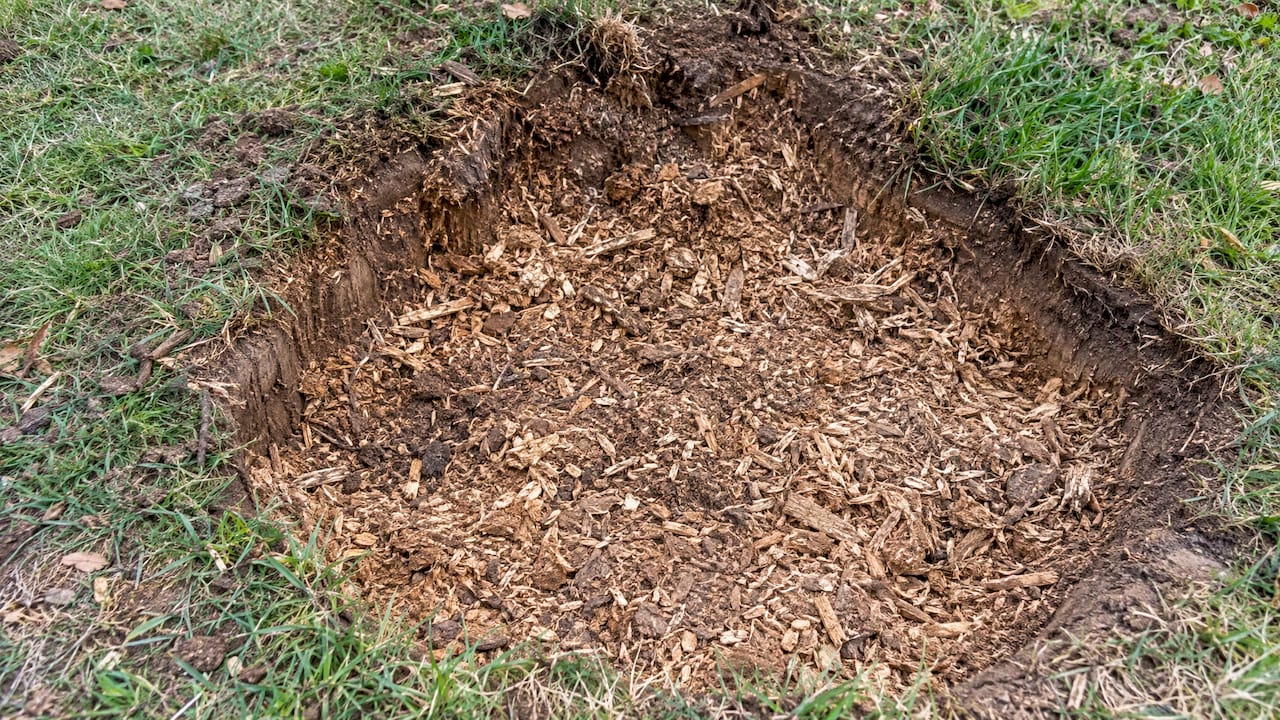
The hole. As chips decay they settle. Expect the spot to sink over months, and plan to top it off with soil and then seed or sod. The pile can be raked out and the hollow filled with topsoil for a smoother lawn right away.
Why chips are not planting soil
The University of Georgia’s Dr. Kim Coder, in a School of Forest Resources paper on stump decay, notes that wood has a very high carbon-to-nitrogen ratio, which is why it breaks down slowly and ties up nitrogen as microbes work on it. His paper on accelerating stump decay also advises against planting a new tree in only wood chips pushed back into the stump cavity. Decay speeds up in warm soil, roughly doubling for every 18°F rise between 40°F and 105°F, so Georgia summers do much of the work, but the chips are still a poor home for a young root system.
If you want the spot replanted, ask the crew to remove the chips from the cavity and fill it with clean topsoil. If you want to hurry the decay of leftover roots, the same paper describes broadcasting a slow-release, low-salt nitrogen fertilizer on the surface and keeping the soil moist but not soggy.
How long does the job take?
A single average-size stump in an accessible yard is often a matter of an hour or two once the machine is in position, including a first pass of cleanup. Large hardwood stumps, multiple stumps, slopes and tight access stretch that out. Rocks and buried metal slow the work too, because the crew must stop and clear them.
Book early in the week for planning, and allow time for locates. Fall and early winter are good times to schedule, because the ground is not at its softest and the yard is not in peak growth. Spring rains can delay jobs on soggy ground.
Timing it with other work
If a tree is coming down, grind the stump as part of the same project. The crew is already on site, the brush is already being cleaned up, and the yard goes through one disruption instead of two. Our tree removal service covers the felling, and the stump is a natural next line on the same estimate. For trees that are large or hard to reach, we own the crane used for crane-assisted removals, and we do not subcontract it out.
If you are trimming other trees in the same yard, fall is a convenient time to combine jobs, as our note on fall tree trimming explains.
Restoring the area afterward
Once the stump is gone, you have a clean patch of ground to work with. Here is a simple order of operations:
- Rake out or remove the chips if you plan to replant or lay sod.
- Fill the hollow with clean topsoil, mounded slightly because it will settle.
- Choose the next step: sod or seed for lawn, a planting bed, or a new tree set in native soil away from the old root zone.
- Water evenly while it establishes.
- Watch for sprouts around the old stump location for a season or two.
If the spot is going to become a garden bed, the chips can be put to use as mulch on top of the soil rather than mixed deep into it. For a practical look at tidying and mulching a bed after the heavy work is done, see these garden bed cleanup steps. Our crew also delivers mulch if you need more.
Is the stump worth grinding right now?
Most stumps are, and the reasons are mostly practical:
- Safety. Stumps are trip hazards and can damage mower blades and tires.
- Pests. Decaying wood can harbor insects and fungi near the home.
- Sprouting. Some species keep sending up shoots from the stump.
- Appearance and value. A clear yard looks cared for and is ready for landscaping, fencing or a patio.
- Space. You get the ground back without waiting years for natural decay.
Why hire a crew that owns its equipment
Stump grinding looks simple from the driveway, but the machine is heavy, the cutting wheel is dangerous, and the ground hides surprises. When one company handles the quote, the grinding and the cleanup with its own people and its own machines, you know who to call if something comes up, and who is accountable for the yard when the truck pulls away. We are licensed, bonded and insured, which matters when a machine works close to your house, driveway and fence.
We have been family owned and operated since 1987, and the same crew that estimates your job does the work from beginning to end. That is the standard we hold ourselves to on every stump.
Perspective
Homeowners tell us the same thing: they want a straight answer before anything starts. How big is the stump, what will be left, what will the yard look like on Friday? So we tell them plainly.
Our view is that a stump is not a small job just because it is low to the ground. The machine is heavy, the wheel is fast, and the ground hides lines, roots and rocks. We believe the right way is to look at the site, ask about the plan for the spot, and then grind to the depth that plan needs, with cleanup done by the same crew that did the work.
That is why we run our own crew on our own equipment, with no subcontractors. When you call, you reach the family that has served North Georgia since 1987, and the person who gives you the quote is part of the team that shows up. Ask us about the chips, the depth and the replanting before the job, and we will answer the way we would for a neighbor.
R&R Tree Service Team
Get your stump ground
If you have one stump or several, we can look at them, talk through the depth and cleanup, and give you a clear estimate. R & R Tree Service handles stump grinding and removal for residential and commercial properties across North Georgia, along with tree removal, trimming, land clearing and 24/7 emergency response. Our crew is licensed, bonded and insured and works from the first quote to the final cleanup.

Call us or send a quote request through our site with photos of the stump, its location and anything buried nearby. Because we are based in Buford, ask us to confirm service for your Marietta address when you reach out. You can also see our Buford stump grinding page for how we work locally.
FAQ
What is the difference between a stump grinder and stump removal?
A stump grinder is the machine, and stump grinding is the service of shredding the stump below ground level into chips. Stump removal means digging the stump and major roots out of the ground, which leaves a large hole. Grinding is faster and disturbs less of the yard, while removal makes sense when the spot must be completely cleared for construction.
Will the roots keep growing after grinding?
The stump and nearest root flare are removed, and the rest of the roots decay over time. Some species may send up sprouts from remaining roots, so check the area through the next growing season and cut shoots back promptly. Tell the crew the species if you know it.
Can I plant a tree where the stump was?
It is better to plant a bit away from the old root zone, or to have the chips removed and the cavity filled with clean topsoil first. The University of Georgia’s research advises against planting a new tree in a stump cavity filled only with wood chips. Settle the plan with us before the job so we grind to the right depth.
Do I need to call 811 for stump grinding?
Georgia’s Call Before You Dig law applies to excavation, and grinding below the surface puts a machine close to buried lines. Calling 811 is free and gets underground utilities marked. Tell us when you have done it, and flag anything private, like sprinkler lines, that the public locate does not cover.
How do I get a stump grinding quote?
Call us or use the quote form on our site with the stump’s approximate width, a photo, and any access details such as gates or slopes. We will confirm service for your Marietta address and arrange a look at the site, so the estimate reflects the actual job.
Sources
- Georgia Power: Call 811 Before You Dig or Work
- University of Georgia (Dr. Kim D. Coder): Accelerating Stump Decay Processes
- Garden bed cleanup steps and timing
 (678) 482-9994