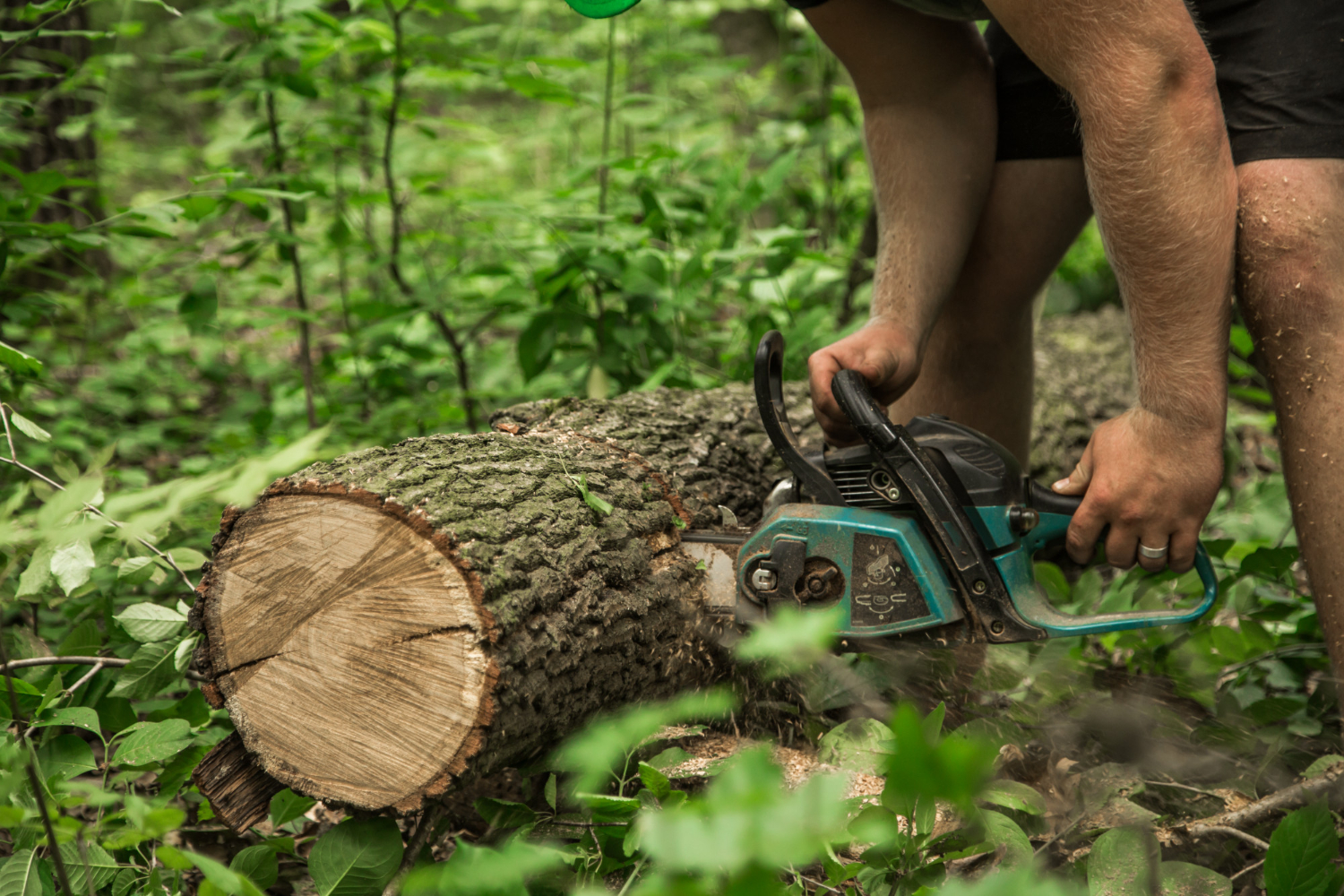
Do I really not need a permit to cut down a tree in Winder?
Not for a tree on your own private property — the city states it plainly. What you cannot do is take a tree out of the right-of-way; the City and Georgia DOT are the only entities allowed to do that. If there is any doubt about where the boundary falls, Winder Public Works will confirm whether a particular tree is in the right-of-way.
How do I tell if a tree is in the right-of-way?
Do not judge it by the fence line or by how much grass you cut. Right-of-way widths vary and frequently extend further back from the kerb than owners assume, particularly on older streets. Winder Public Works can confirm it on request, and it is a five-minute question that avoids an expensive mistake.
A street tree keeps dropping limbs on my drive. Can I have it taken down?
Not on your own initiative if it stands in the right-of-way. Report it rather than removing it — that is the City and GDOT’s call. What we can do is deal with anything on your side of the line, and make a site safe in an emergency where there is an immediate danger.
Is Winder under the same rules as Gwinnett County?
No, and this trips people up. Winder sits in Barrow County, so the Gwinnett homeowner framework — tree save areas, the requirement to keep two live trees on a lot, the Chattahoochee River Corridor provisions — is not what applies here. Rules genuinely change at the county line.
My property backs onto woodland. Does that change anything?
It changes the risk rather than the paperwork. Trees on the edge of an established stand grew up sheltered, putting on height rather than taper, and never developed the reaction wood a solitary tree builds. Once a lot is cleared beside them they carry loads they were never grown for. Those boundary stems are worth an inspection before a storm season, not after.
When is the best time to have trees pruned?
Late autumn through late winter for most hardwoods. The structure is visible with the leaves off, cuts close before the spring flush, and there is far less insect and disease pressure around fresh wounds. Deadwood removal and clearance work can be done at any time, and anything genuinely hazardous should not wait for a season.
We have old trees along a pasture fence. Anything different about those?
A great deal. A tree grown in the open along a fence line never competed for light, so it spreads wide and low with long horizontal limbs and heavy union points instead of growing a straight competitive stem. That geometry creates enormous leverage at the union, and those unions are where open-grown trees fail — sometimes on a windless summer afternoon rather than in a storm. Livestock make it worse: hooves compact the soil over the root plate and stock rub and strip bark at the base, so the tree is quietly losing both root function and stem strength while looking magnificent from the house.
Barbed wire is grown into one of our trees. Does that matter?
For the tree, less than people expect — it usually compartmentalises around embedded wire and carries on. For anyone cutting it, a great deal. Wire, old fence staples and grown-in strainers destroy a saw chain instantly and can throw fragments. Tell us before we start if a tree has ever been part of a fence line, and we will approach it differently. It also affects whether the timber is worth anything as firewood.
Do you charge for an estimate in Winder?
No. Estimates are free and given on site, because the price is driven by access and by what sits underneath far more than by the height of the tree. An open field job and the same tree wedged between a house, a fence and a power drop are entirely different pieces of work.
We planted young trees and they are struggling in the heat. What went wrong?
Nine times out of ten it is planting depth or watering pattern rather than the weather. A tree set too deep, with the root flare buried under soil or mulch, never establishes properly and declines slowly for years. And a newly planted tree has almost no root system outside its original rootball, so it needs a long slow soak directly over that ball perhaps twice a week through a dry spell — not a daily sprinkle spread over the lawn. The flare should be visible where the trunk widens into the roots; if you cannot see it, the tree is too deep.
Is Winder too far out for you?
Not at all — it is part of our regular service area from the yard on Buford Highway. R & R has worked North Georgia since 1987 as a family business, is licensed and insured and a member of the Tree Care Industry Association, owns all its equipment including the crane, and never subcontracts. Emergency cover runs 24/7 on (678) 482-9994.