
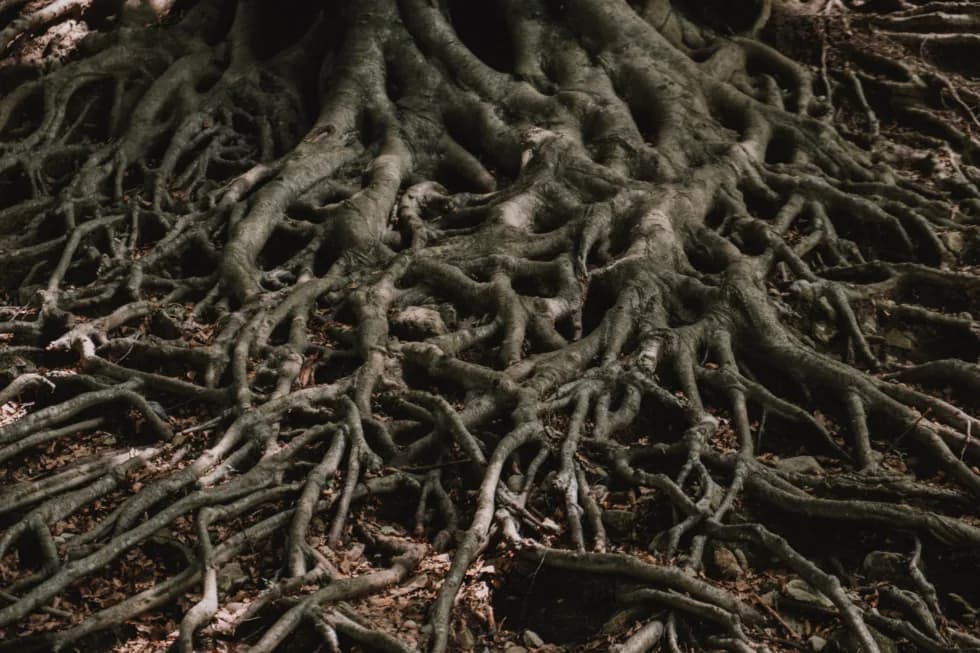
Tree Root Removal: A Comprehensive Guide
Quick answer: whether a root can be removed safely depends on one question — is the tree staying? If the tree is gone, roots are fair game: grind, dig, or treat them. If the tree is staying, every cut is a wager against its health and stability: the working rule arborists and city tree codes use is to protect the critical root zone — roughly one foot of radius per inch of trunk diameter — and never destroy more than about a quarter of a root system. Cross that line and the tree you kept becomes the hazard you were avoiding.
- Tree staying? Protect the critical root zone (~1 ft radius per inch of trunk diameter); losing over ~25% of roots risks decline and failure.
- Tree gone? Grinding removes the stump and root crown; leftover roots decay harmlessly over a few years.
- Surface roots in the lawn: mulch over them. Shaving them off or burying them under deep fill injures the tree.
- Roots in pipes: roots exploit joints and cracks that already leak — fix the pipe, then deal with the tree.
- A root problem within a few feet of the trunk is really a tree decision, not a root decision.
How close to a tree can you cut roots safely?
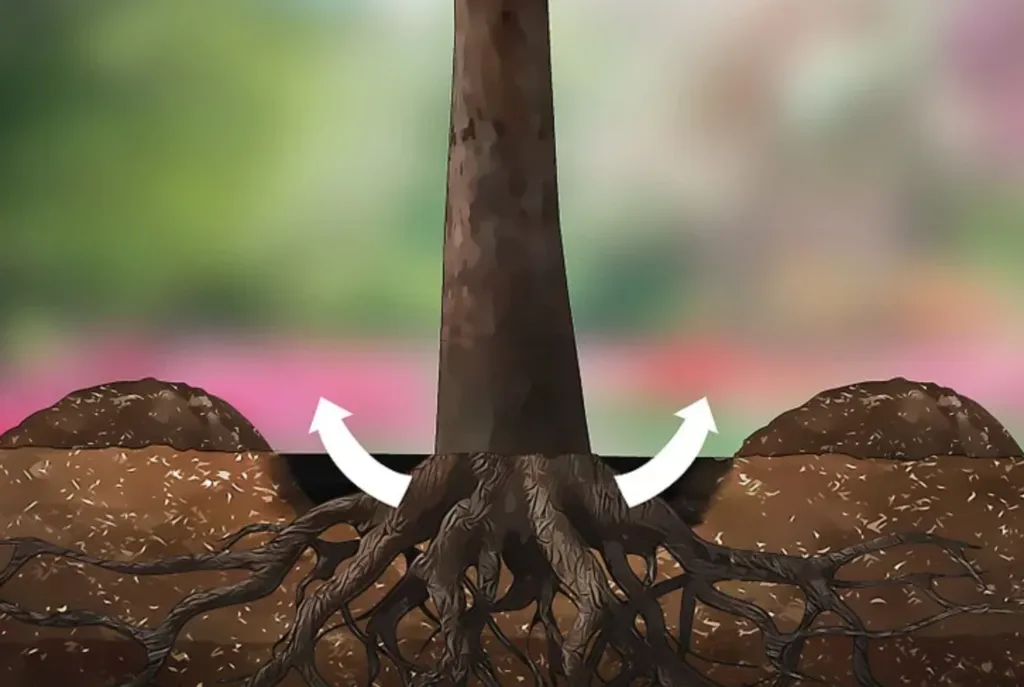
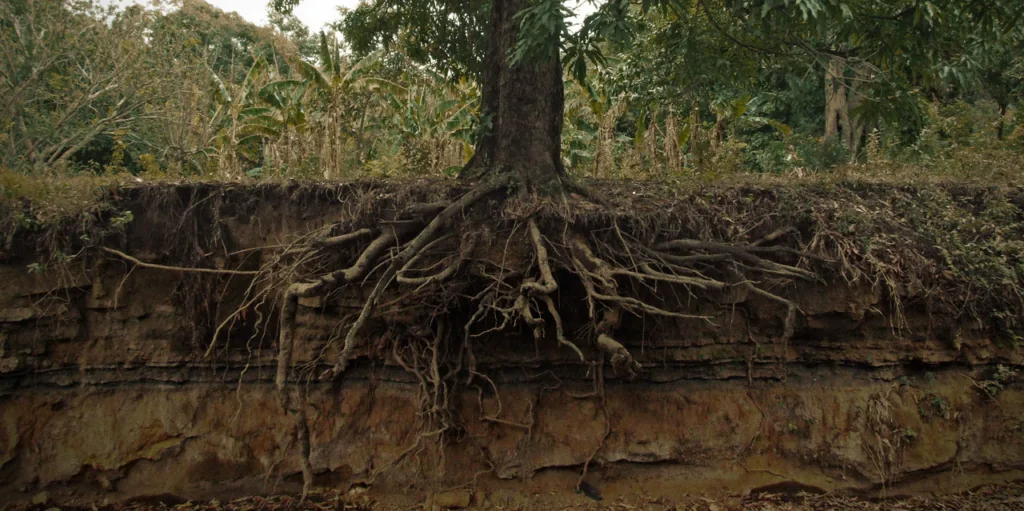
Use the critical root zone as your map. City tree-preservation codes — Washington DC's Urban Forestry code is a clear public example — define it at about one radial foot per inch of trunk diameter: a 20-inch oak owns a 20-foot circle. Inside that circle, cutting, trenching, or compacting damages the roots the tree stands on; damage more than about a quarter of it and decline over the following seasons is the likely outcome. Utility and irrigation trenches are the classic offenders — route them around the circle, or tunnel under rather than trench through.
What should you do about surface roots in the lawn?
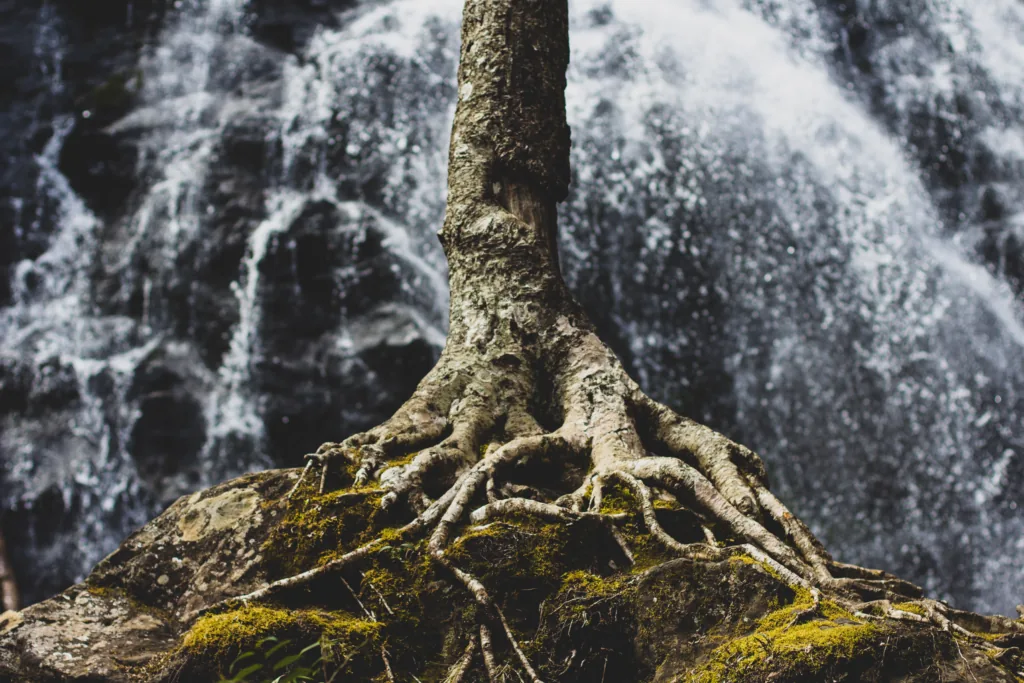
Cover, don't cut — that's the heart of sound tree root management. Roots rise where soil is thin, compacted, or eroding — shaving them off wounds the tree's plumbing at its busiest point, and piling deep soil over them suffocates the same roots you're hiding. The fix that works: a 2–4 inch mulch ring over the root area (never touching the trunk), which hides the roots, ends the mower battles, and actually helps the tree.
What about roots in sewer lines and foundations?
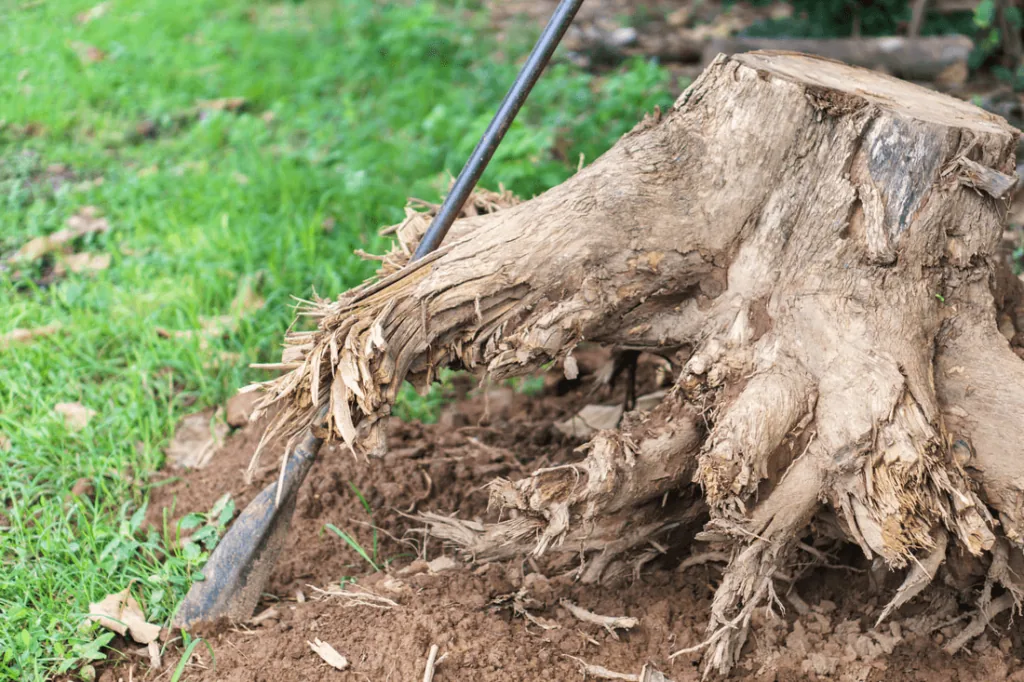
Two honest facts. Roots don't crush intact pipes or foundations — they exploit joints, cracks, and moisture that already exist; the root is the symptom, the leak is the disease. And cutting the intruding root without repairing the pipe buys you a season, not a solution. Fix the line, then decide about the tree: if it's a water-hungry species sitting on top of your sewer lateral, the long-term answer may be removal and a better-placed replacement.
How do you remove roots from a tree that's already gone?
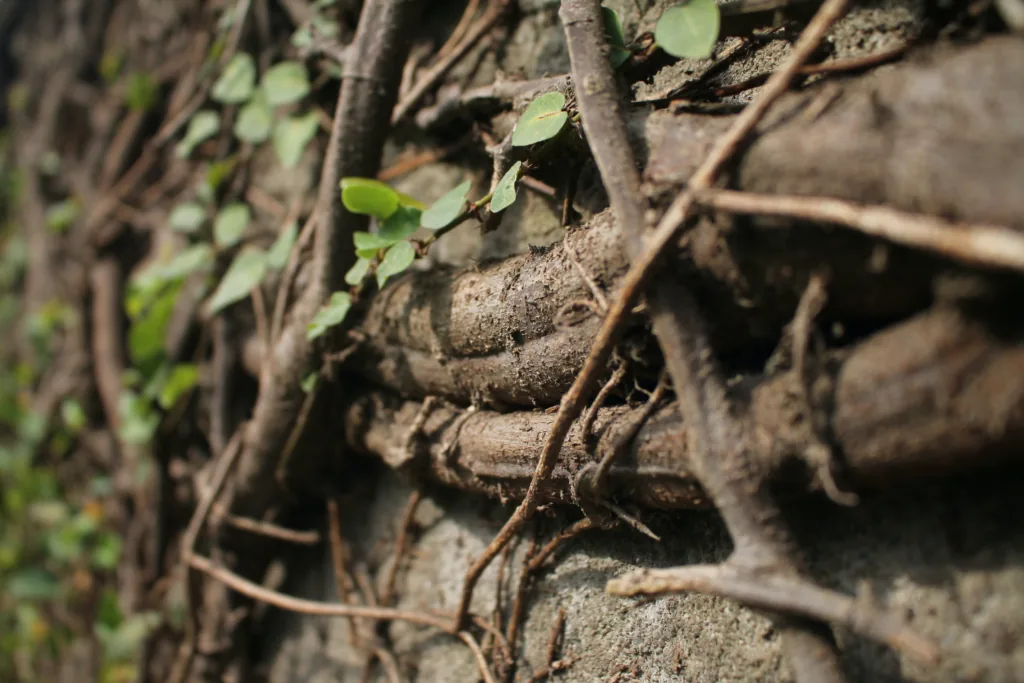
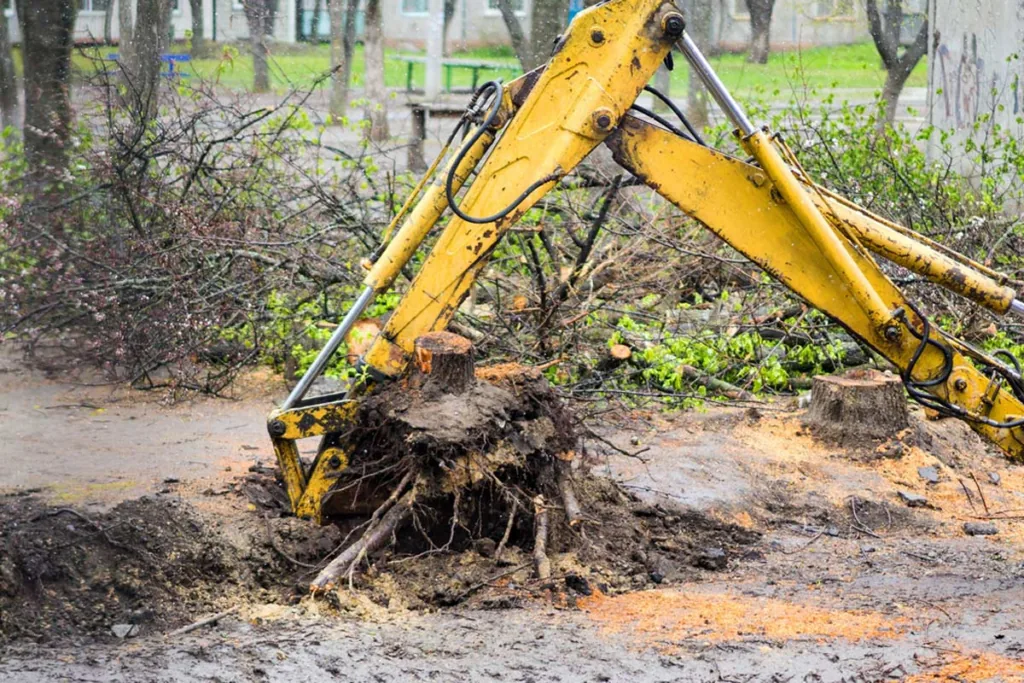
Three tools, in order of common sense. Grinding — the root crown goes with the stump, regrowth stops for most species, and buried roots decay on their own; this is the standard finish to a removal, and it's what our stump grinding service does. Excavation — full root-ball removal, justified when you're building or replanting on the exact spot. Cut-surface herbicide — for sprout-prone species that keep pushing shoots; the method and products are in our guide to killing tree roots.
When is a "root problem" really a tree decision?
When the roots you'd need to remove hold the tree up. Major roots heaving a driveway right at the trunk, roots under the foundation of an addition, a root plate lifting on one side after a storm — these aren't trimming problems, they're stay-or-go decisions about the whole tree. That call deserves eyes on site: species, lean, targets, and what the root damage has already cost the tree's stability.
Frequently asked questions
Can cutting one big root kill a tree?
It can destabilize it, especially close to the trunk on the windward side. Big structural roots are anchors; the safe-cut question is always about size, distance from the trunk, and how much of the system has already been lost.
Will roots keep growing after a tree is cut down?
Roots don't keep expanding once the tree is gone, but sprout-prone species can push new shoots from the stump and roots. Grinding the root crown — or a cut-stump herbicide treatment — ends it.
Can I concrete over tree roots?
Over a living tree's roots — expect the concrete to lose. Sealing the root zone also starves the roots of water and air, harming the tree. Bridge-style hardscaping or rerouting the path beats pouring over the circle.
Who removes tree roots near me?
R & R Tree Service handles stumps, roots, and whole-tree decisions across Buford, Suwanee, Lawrenceville, and North Georgia — family-owned since 1987, licensed and insured, free estimates: (678) 482-9994.
Get a straight answer on the roots
Send photos of the roots and where they sit — lawn, driveway, pipe run, or foundation — and we'll tell you honestly what's safe to remove, what should stay, and what the tree itself is telling you. Free estimates from R & R Tree Service: (678) 482-9994.
 Call (678) 482-9994