
How To Kill Tree Roots: 5 Common Ways
Quick answer: the only consistently effective way to kill tree roots is to cut the stump fresh and treat the outer ring of the cut surface with a concentrated systemic herbicide — glyphosate at 20%+ or triclopyr — within minutes of cutting. Home remedies like vinegar and rock salt mostly kill sprouts above ground while the root system lives on, and salt damages the soil for everything else growing near it.
- Cut-stump herbicide treatment is the method university extensions actually recommend — applied to the fresh cut, it travels into the roots.
- The outer 2 inches of the stump surface matter most — that ring is the living tissue that moves the herbicide down.
- Vinegar is a leaf-and-sprout killer, not a root killer. Rock salt can suppress roots but poisons the surrounding soil.
- Never treat roots of a tree you want to keep — and never guess with a neighbor's tree; shared root systems are real.
- Grinding the stump removes regrowth at the source — no chemicals needed.
Whether you're fighting stump sprouts in a Buford backyard or roots that keep sending up shoots across the lawn, here's what actually works, what doesn't, and where each method belongs.
Why do tree roots keep growing after the tree is cut down?
Because the roots hold the tree's energy reserves. Species like sweetgum, elm, poplar, willow, crape myrtle, and Bradford pear use that stored energy to push up sprouts — from the stump and sometimes from roots many feet away. Each sprout you mow returns weaker, but a vigorous root system can keep trying for years if nothing interrupts it.
What actually kills tree roots?
1. Cut-stump herbicide — the method that works
Cut the stump low and level, then — within minutes, before the surface dries — paint the outer ring of the cut with the right product. Alabama Cooperative Extension recommends concentrated glyphosate (20%+ active ingredient; the diluted ready-to-use sprays will not do it) or a triclopyr product labeled for cut-stump use. Penn State Extension notes the critical zone is the 2 inches just inside the bark — that living ring is what carries the chemical to the roots.
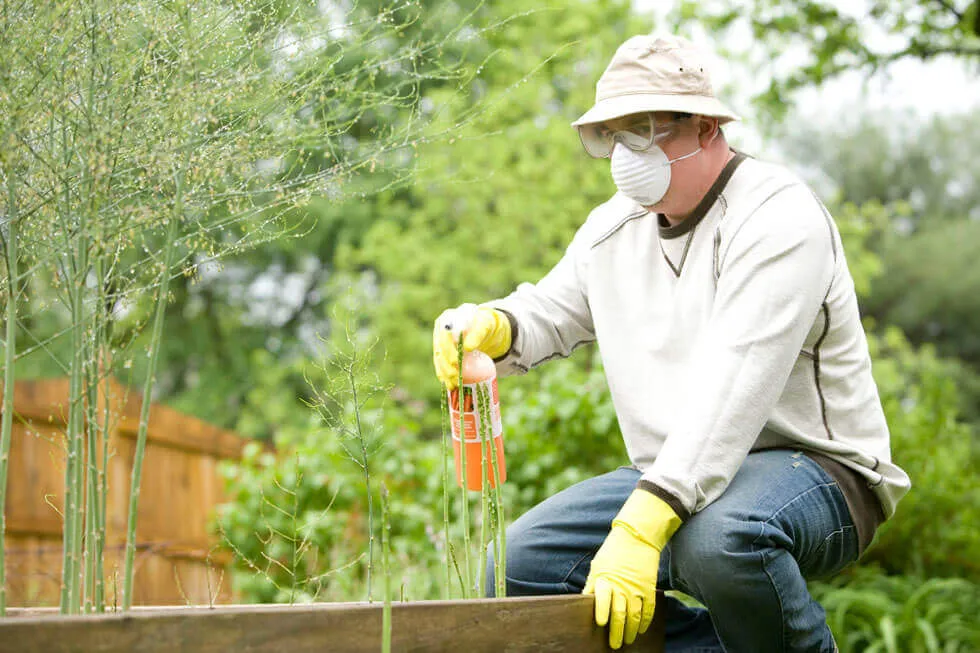
Always read and follow the product label — it's the law and it's the difference between killing the roots and wasting an afternoon. Wear gloves and eye protection, and keep pets off the stump until it's dry.
2. Stump grinding — the no-chemical answer
Grinding takes out the stump and the root crown — the growth engine — 4 to 6 inches below grade or deeper. What's left behind decays naturally. For most homeowners this is the cleanest path: no chemicals in the yard, and the spot is ready to seed. It's exactly what our stump grinding service does every week across North Georgia.
3. Repeated sprout removal — slow but real
Every sprout you cut forces the roots to spend reserves. Done relentlessly — every few weeks, every sprout — the root system starves over one to three growing seasons. It costs nothing but persistence.
4. Vinegar — mostly a myth for roots
Household vinegar burns the leaves off sprouts, which looks like progress. The roots underneath barely notice. Horticultural-strength vinegar is genuinely hazardous to skin and eyes and still doesn't translocate to roots the way systemic herbicide does. Honest verdict: fine for a weed between pavers, wrong tool for a root system.
5. Rock salt — works a little, costs a lot
Salt in high doses can suppress roots, but it doesn't stay put. It raises soil salinity where your grass, shrubs, and nearby trees drink, and it keeps doing that long after the target is dead. We don't use it and don't recommend it.
What about roots in sewer lines or under the driveway?
Roots follow water and oxygen — a cracked sewer joint is a buffet. Killing the tree's roots stops future intrusion, but the pipe still needs a plumber, and a heaved driveway slab still needs the offending root addressed at the edge, not under the middle. If the tree itself is still standing and you want it gone, that's a tree removal decision first, then roots.
When should you NOT kill tree roots?
When the tree is staying. Cutting or poisoning the roots of a living tree you intend to keep is how healthy trees become hazard trees: lose too much of the root system and the tree declines and can destabilize — the widely used planning standard treats roughly a quarter of the root zone as the danger line. Surface roots in the lawn deserve mulch over them, not a saw through them — our root removal guide covers the safe options.
Frequently asked questions
How long does it take for tree roots to die naturally?
After a stump is ground, most root systems stop sprouting within a season and decay underground over 3–10 years depending on species and soil. Sprout-prone species are the exception — they're why the grind depth matters.
Will Epsom salt kill tree roots?
Not reliably. Magnesium sulfate can dry out a stump slowly over years, but controlled results are poor compared with cut-stump herbicide, and heavy doses aren't harmless to soil.
Can I kill roots coming from my neighbor's tree?
Careful — those roots belong to a living tree, and killing them can destabilize or kill the whole tree, which creates liability in both directions. Talk to the neighbor and get a professional assessment first.
Does bleach kill tree roots?
Bleach is not a systemic herbicide — it damages what it touches and stops. It also has no business in soil or near waterways. Use a labeled cut-stump product instead.
Who removes stumps and roots near me?
R & R Tree Service grinds stumps and handles full removals across Buford, Suwanee, Lawrenceville, and North Georgia — family-owned since 1987, licensed and insured. Free estimates: (678) 482-9994.
Skip the folk remedies — get it done once
Tell us what's sprouting and where, and you'll get a straight answer on whether it's a grind, a cut-and-treat, or nothing to worry about. Free estimates from the crew that's handled North Georgia roots since 1987 — R & R Tree Service, (678) 482-9994.
 Call (678) 482-9994