
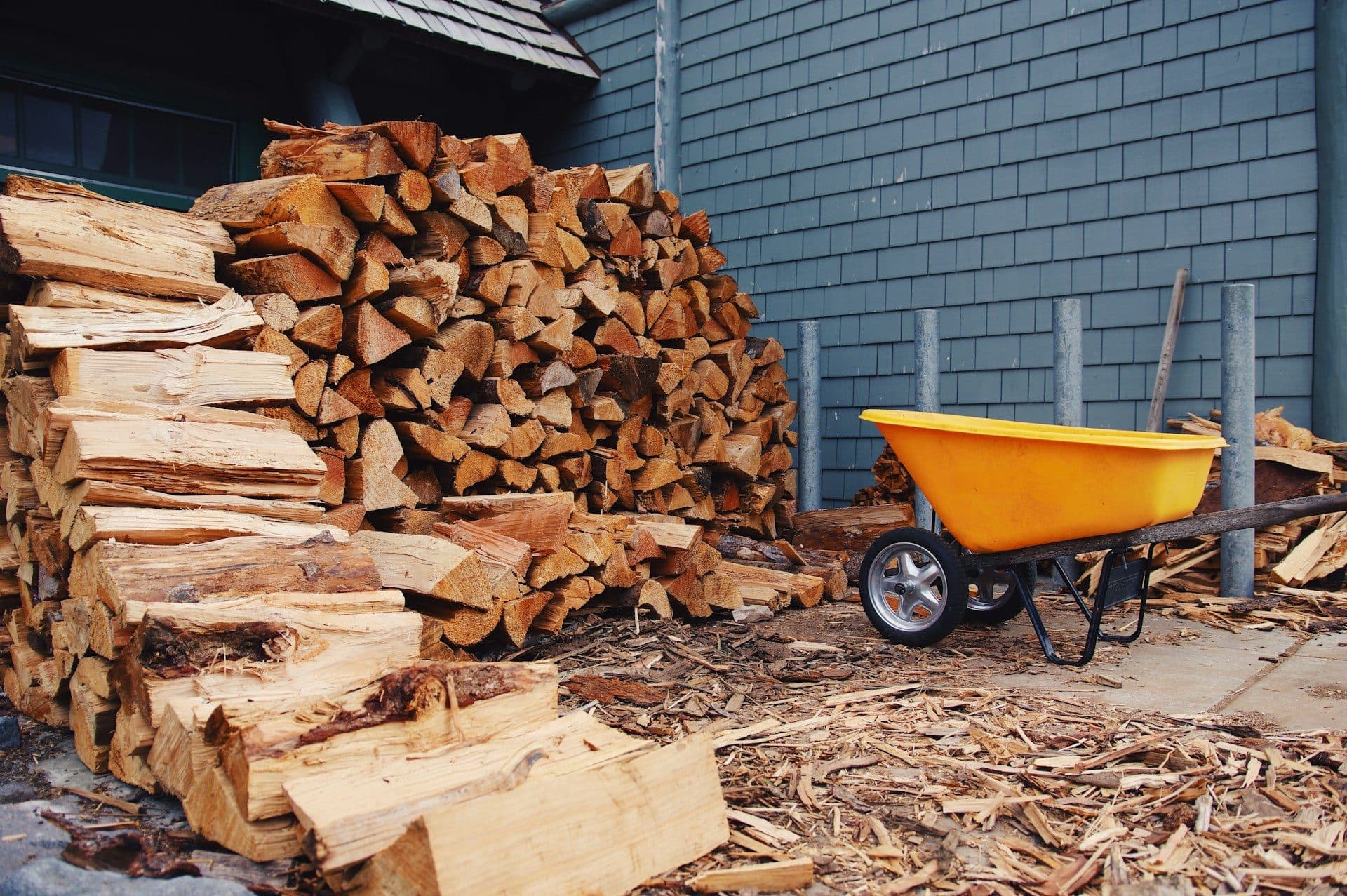
Seasoned Firewood vs. Green: Which Should You Buy?
Quick answer: buy seasoned firewood if you plan to burn it this season, and green firewood only if you can split, stack and dry it for several months before you need it. Seasoned wood has dried to below 20% moisture, so it lights easily and leaves less creosote in the chimney. Green wood is fresh-cut and can be half water by weight; it costs less because you do the drying. In Georgia, split and stacked wood can season in as little as three to four months, but dense oak usually needs longer.
- The target: firewood should read below 20% moisture on a wood moisture meter before you burn it.
- The label is not proof: a University of Tennessee lab test found bagged "seasoned" oak averaging 66% moisture.
- The best home test: split a piece and check the fresh face — with a meter, or by eye for a dark, wet-looking center.
- Georgia dries wood well: UGA says split, stacked, covered wood can season in three to four months here; oak takes longer.
- Green makes sense when you are buying for next winter and have room to stack it — not for a fire this week.
Every fall the same question comes in with the first cold snap: should I pay for seasoned firewood, or save money and buy it green? The answer depends almost entirely on one thing — when you want to burn it.
We sell both, out of our own tree work in North Georgia, so we have no reason to push one over the other. Below is what "seasoned" actually means in numbers, how to check a load yourself in five minutes, how long wood takes to dry in a Georgia yard, and when green wood is the smarter buy. For which species to burn, see our guide to the 4 types of firewood.
What is seasoned firewood, exactly?
Seasoned firewood is wood that has been cut to length, split and left to air-dry until most of its water is gone. The number nearly every authority uses is below 20% moisture content. The EPA's Burn Wise program says wood burns best below 20% and tells you to test it with a moisture meter; University of Tennessee Extension and UNH Extension use the same line.
Green firewood is simply wood that has not dried yet. It is not a species and it is not a quality grade — a perfect piece of white oak is green the day the tree comes down. How wet it starts depends on the tree:
| Species | Green moisture: heartwood / sapwood | What that means |
|---|---|---|
| White ash | 46% / 44% | Starts the driest of the common hardwoods |
| White oak | 64% / 78% | Dense; slow to give up water |
| Southern red oak | 83% / 75% | Among the wettest; slowest to season |
| Water oak | 81% / 81% | Very wet when cut |
| Mockernut hickory | 70% / 52% | Dense, wet heartwood |
| Sugar maple | 65% / 72% | Middle of the pack |
| Sweetgum | 79% / 137% | Very wet sapwood |
| Loblolly pine | 33% / 110% | Dry heart, soaking-wet sapwood; dries fast once split |
Why one source says 50% water and another says 100%
Two different scales are in use, and mixing them up is behind a lot of confusing advice. Foresters measure moisture against the weight of the wood once it is completely dry — that is how the Wood Handbook figures above are calculated, and why some can top 100% (more water than wood). Consumer articles often quote water as a share of the log's total weight instead. UGA Extension, for example, says fresh-cut firewood is 40% to 50% water by weight. A log that is half water by weight reads 100% on the forester's scale. Either way, the advice is the same: get it below 20% on a meter before it goes in the firebox.
Why does seasoned firewood burn better than green?
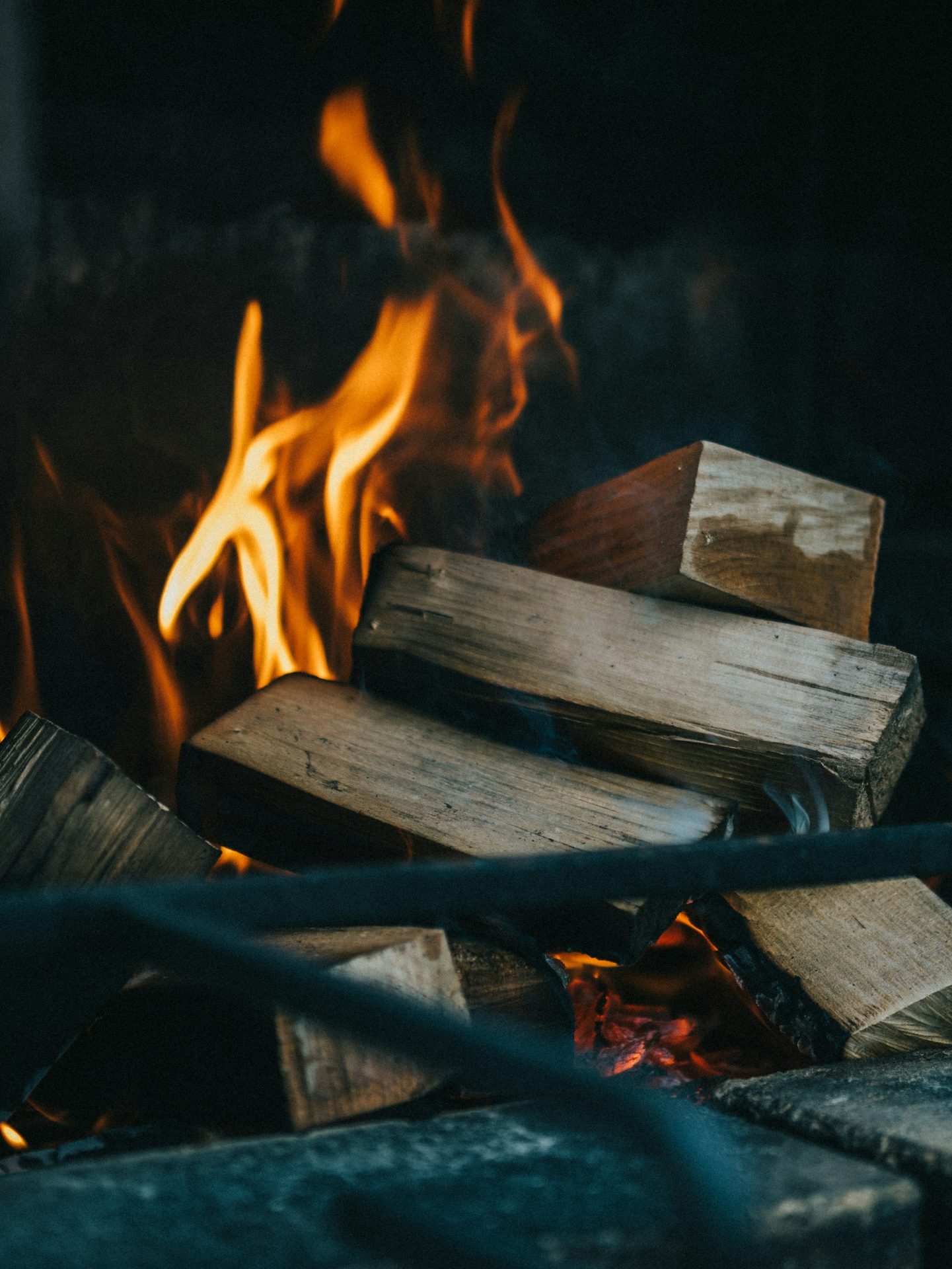
Because a fire has to boil the water out of a log before the wood itself can burn, and that heat goes up the chimney instead of into the room. UGA Extension puts the scale of it plainly: one fresh-cut cord of oak holds enough water to fill five and a half 55-gallon drums.
In practice, green wood shows itself quickly:
- Hard to light and hard to keep lit — it hisses, sizzles and smolders.
- Less heat for the same amount of wood, so you burn more of it.
- More smoke inside and outside the house. EPA's Wet Wood is a Waste brochure warns wood smoke can trigger asthma attacks.
- More creosote in the flue, the residue that causes chimney fires.
- Possible stove damage. UNH Extension warns that green wood can damage wood stoves with catalytic combustors; check your stove manual for the moisture it requires.
Dry wood is the opposite on every point: it catches fast, burns hotter and cleaner, and gives you more heat per armload. Tennessee's forest products researchers add one more thing worth knowing — there is no danger in over-seasoning. Drier is simply better.
Does burning green wood cause chimney fires?
It raises the risk. The mechanism is simple: a wet fire burns cool. Julian Beckwith, a wood products specialist at UGA's Warnell School, explained that at low temperatures the gases coming off the wood do not burn; they rise as smoke, condense on the cooler chimney walls and build into a layer of creosote that a hot fire can later ignite. Burning wood that has not seasoned long enough favors that buildup "because evaporating water cools the burning process."
Two other habits do the same thing even with dry wood, according to Beckwith: damping a stove way down to smolder all night, and building small fires "just to knock the chill off." Hot, active fires in a well-drawn chimney are the goal.
Is pine firewood more dangerous?
This is the most repeated firewood myth in Georgia, and UGA Extension says research has found it false. Pine's sticky resin is not what coats chimneys — low-temperature burning is. Dry pine burns hot and fast, which makes it great kindling; the reason to use hardwood for a long evening is that pine burns out quickly, not that it is unsafe. The trouble is wet pine, or wet anything.
A Georgia footnote from CSIA: if your fireplace smells in summer, that is creosote in the chimney, made worse when the humidity is high and the air conditioning is running.
How can you tell if firewood is seasoned?
Tennessee Extension makes an important point first: how long ago the tree was cut is not a reliable sign. Logs left in the round, pieces on the ground and wood deep in a heap dry very little, even after many months. So judge the wood, not the story. From most reliable to least:
- Use a moisture meter on a fresh split. EPA says split a piece and push the meter's pins into the newly split face, along the grain; 20% or less is dry. UNH Extension adds: test several pieces from different parts of the pile. Testing the outside of a log only tells you about the outside. Basic meters run $15 to $40, per EPA.
- Look inside a split piece. UGA's Beckwith said recently cut wood shows a darker, wet-looking center with lighter, drier-looking wood near the edges and ends.
- Weigh it. Beckwith called weight the best single indicator: fill a cardboard box with your wood, weigh it on a bathroom scale, and compare with the same box of wood you know is seasoned, of the same species.
- Knock two pieces together. Dry wood sounds hollow or "rings"; wet wood thuds. That is how UT, UNH and the EPA all describe it. (At least one popular firewood article gets it backwards — trust the extension services.)
- Check the ends and the bark. Deep radial cracks in the end grain suggest drying, but UT warns dry wood "may (but may not)" show them. Bark that peels off easily is a good sign; bark locked tight suggests fresh wood. Seasoned wood also looks weathered compared with fresh-cut (EPA describes it as darker).
A five-minute check when a load is delivered
Pull three pieces from different parts of the pile, including one from the bottom. Split each one if you can. Meter the fresh faces, or if you have no meter, look for that dark, damp center and compare weights by hand. If the wood is wet inside, say so at the time — a good seller would rather hear it on day one. And if you buy bagged wood at a store, look at the bag: Tennessee's researchers note that condensation inside the plastic is a bad sign that the wood is still wet.
Is firewood sold as "seasoned" always seasoned?
No, and there is a published test that shows it. In October 2007, the Tennessee Forest Products Center bought bags of firewood labeled "Seasoned Firewood" from a Knoxville supermarket and oven-dried every piece. All of it was oak, and all of it was too wet — the average was 66% moisture, barely below the 75% to 80% of freshly cut oak. The wood may have been cut long before, the authors wrote, but it had never been stacked where it could dry.
Air-dried wood also varies with the weather. UNH Extension notes that air-dried firewood is generally around 30% moisture, and that kiln-dried wood usually comes in under 20%. So "seasoned" is a description, not a guarantee. Fair questions to ask any seller:
- When was it split, and how has it been stored since — stacked off the ground, or in a heap?
- Which species is in the load?
- Will you meter a few pieces at delivery, or are you fine with me doing it?
What a cord should measure and how firewood sales are regulated is a separate topic — see what firewood should cost in North Georgia, including how seasoned and green compare.
How long does firewood take to season in Georgia?
Faster than the national rule of thumb, if it is handled right. UGA Extension says that with Georgia temperatures, fresh-cut firewood that is split, stacked and covered can air-dry enough to burn in three to four months. The EPA's national guidance is longer — about 6 months for softwoods and about 12 months for hardwoods — and Tennessee Extension says wood prepared in the spring should be dry enough to burn the following fall.
What about the humidity? It matters less than people think. A USDA Forest Service study calculated how dry wood will eventually get when left exposed to outdoor air, city by city, from decades of weather records. For Atlanta the answer ranges from about 11.8% in April to 14.2% in August. In other words, Georgia air will take wood well below the 20% target — given time and airflow. (For comparison, the same study puts Phoenix in June at 4.6%.)
So in a Georgia yard, what slows firewood down is rarely the air. It is the way the wood is kept:
- Left in rounds. Unsplit logs dry very little, even after months (UT). EPA says split wood dries much faster.
- Sitting on the ground or in a heap. Pieces in contact with the soil or buried in a pile stay wet.
- Covered on all sides. EPA says cover only the top — wrapping the sides traps moisture.
- Stacked in the shade with no breeze. Sun and moving air do the work.
Species sets the pace, too. Using the green moisture figures above as the starting line, here is a reasonable planning guide for split wood stacked properly in North Georgia:
| Wood | Plan on | Why |
|---|---|---|
| Pine | About 3–6 months | UGA's 3–4 month Georgia figure; EPA's ~6 months for softwoods |
| Ash | The fast end for hardwoods | Starts at roughly 45% moisture vs 64–83% for oak |
| Maple, hickory, white oak | 6–12 months | Dense wood; EPA's ~12 months for hardwoods |
| Red and water oak | 12 months or more | Starts the wettest; one firewood guide allows up to two years for red oak |
From our side of the business, one more thing: the calendar matters. Wood split in spring has the whole hot season to dry. Wood split in November dries slowly until the weather warms, so green wood bought in late fall is really next winter's wood. How to stack it for airflow — and how far from the house — is covered in how to store firewood.
What about seasoned ash firewood?
Ash has a reputation as one of the easiest hardwoods to season, and the numbers back that up. In the USDA Wood Handbook, white ash comes in at about 46% moisture in the heartwood and 44% in the sapwood when freshly cut — far below red oak, water oak or sweetgum. Less water to lose means it reaches the 20% line sooner. It still needs to dry: 45% is more than twice the target.
There is a Georgia catch. The emerald ash borer, a beetle that kills ash trees, was first confirmed in Georgia in 2013 in DeKalb and Fulton counties, and UGA says it spreads mainly by hitching rides on infested firewood, logs and nursery stock. UGA's advice is direct: buy local firewood, whether for camping or the house, and do not move it long distances. If you have ash trees in the yard, UGA recommends having a certified arborist check them for the beetle.
When does buying green firewood make sense?
Green wood is the budget choice because the seller has not spent months stacking and waiting — you do that part. It is the right buy when time and space are on your side:
| Your situation | Buy | Why |
|---|---|---|
| You want a fire this week or this month | Seasoned | Green wood will not dry in time |
| You are filling the rack for next winter | Green | Cheaper, and spring-to-fall is enough time to dry it |
| You heat with a catalytic wood stove | Seasoned only | UNH Extension warns green wood can damage catalytic combustors |
| You burn now and want to stock up | Both | Seasoned for this season, green stacked for the next |
| Backyard fire pit, a few fires a year | Seasoned | Green wood smokes heavily and is hard to keep going |
| Outdoor wood boiler away from the house | Check the manual | One firewood guide says many owners burn green wood in these; follow the unit's fuel spec |
| No dry, open spot to stack it | Seasoned | Green wood that cannot dry stays green |
Two things green wood is not good for: a fire tonight, and "drying it out" next to the stove. Stacking wet wood close to a fire to hurry it along is a fire hazard, and it still will not be properly dry. EPA's rule is short — do not burn wet or green wood.
Is kiln-dried firewood better than seasoned?
Kiln-dried wood is dried with heat in a chamber instead of by the weather, so it reaches a low moisture content quickly and consistently; UNH Extension says kiln-dried firewood generally comes in under 20%. Well-seasoned air-dried wood can get there too, as the Atlanta figures above show — it just takes the right stacking and enough time, and it varies more from load to load.
For most fireplaces and stoves, the meter reading is what counts, not the method. Dry is dry. If a more predictable product matters more to you than price, kiln-dried is worth a look.
How R & R Tree Service sells seasoned and green firewood
Our firewood comes from our own tree removals and land-clearing work around Gwinnett, Hall and Forsyth counties, so we know what each load is and where it grew. We sell oak, hickory and maple hardwoods plus pine, and every species is available two ways: seasoned (air-dried, ready to burn) or green (lower priced, for customers who will dry it themselves). We tell you which is which, and we will match you to the right one if you tell us when you plan to burn it.
Order a half cord, a full cord or less. Firewood delivery is usually within 48 hours, with optional stacking, or pick up at our yard at 1381 Buford Hwy in Buford, Monday through Saturday — call ahead. We serve homes and businesses from Buford and Sugar Hill to Cumming, Gainesville and the rest of the Atlanta metro. Call (678) 482-9994 to order or ask what we have seasoned right now.
Frequently asked questions
What moisture content should seasoned firewood have?
Below 20%, measured with a wood moisture meter on a freshly split face. That is the threshold used by the EPA and by University of Tennessee and UNH Extension. Freshly cut wood is often 60% or more.
Can firewood be too dry?
No. University of Tennessee Extension says there is no danger in over-seasoning firewood — drier is better. Very dry wood simply burns faster and hotter, so add it a few pieces at a time.
How long does green oak take to dry in Georgia?
Plan on a year or more for red and water oak, and six to twelve months for white oak, split and stacked off the ground with the top covered. UGA says some split wood can season in three to four months in Georgia, but oak starts wetter than most species, so confirm with a meter.
Does pine firewood cause more creosote than hardwood?
No. UGA Extension says research has found this to be a myth; creosote builds up mainly from burning wood at low temperatures, and wet wood burns cool. Dry pine is safe, it just burns out faster than oak or hickory.
Is it OK to burn green wood in an outdoor fire pit?
It will burn poorly and smoke heavily, which your neighbors will notice. There is no chimney to coat outdoors, but for a fire that catches and stays lit, use seasoned wood.
How often should I have my chimney inspected if I burn wood?
At least once a year, under the national NFPA 211 standard that the Chimney Safety Institute of America follows. Have it swept once there is about 1/8 inch of sooty buildup, or sooner if you see glazed creosote.
Does R & R Tree Service sell both seasoned and green firewood?
Yes. We sell oak, hickory, maple and pine, seasoned or green, in half cords, full cords or smaller amounts, with delivery usually within 48 hours. Call (678) 482-9994.
- University of Tennessee Extension — Moisture Content of "Seasoned" Firewood (W179)
- UGA Extension (Pugliese) — Efficient fires start with seasoned wood
- UGA (Beckwith, Warnell School) — Weight best sign of seasoned firewood
- USDA Forest Service, Forest Products Laboratory — Wood Handbook (FPL-GTR-190), Table 4-1
- USDA Forest Service — Equilibrium moisture content of wood in outdoor locations (FPL-RN-0268)
- EPA Burn Wise — Best wood-burning practices
 Call (678) 482-9994