Can I clear the trees between my house and Lake Lanier?
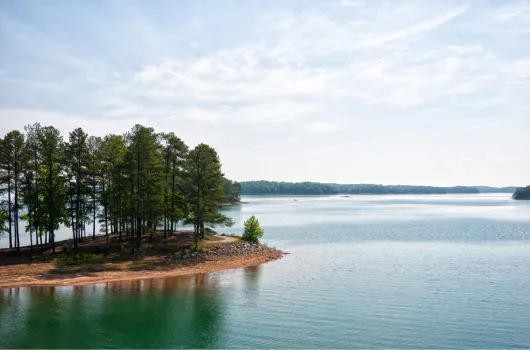
Not on your own authority, and this is the single most important thing to know about a lakefront property here. The land between private lot lines and the water is federal, managed by the US Army Corps of Engineers, and clearing trees or understory there is prohibited without authorisation. Hazardous trees are handled through the Corps, with a ranger assessing the tree first.
How do I find out where my property actually ends?
From the plat and the survey, not from where the mowing stops. The federal boundary around Lanier is surveyed, and long use of a strip does not change where the line falls. If you are unsure, establish it before booking any work — it is far cheaper to check than to explain afterwards.
Do I need a city permit for a tree away from the water?
Confirm with the City of Flowery Branch. The city runs its own code inside the limits, and a Flowery Branch postal address does not tell you whether a specific parcel is inside them or in unincorporated Hall County. We establish which applies for the address before quoting rather than assuming.
Why do lakefront trees seem to fail more often?
Two reasons stacked together. They take wind off open water with nothing upwind to break it, and the ground near the shoreline is periodically saturated, which keeps root plates shallow and their grip poor. A tree that would stand comfortably on a sheltered inland street can be marginal on an exposed frontage.
The lot slopes steeply to the water. Does that affect the job?
Considerably, and usually more than the size of the tree. Equipment generally can only approach from the road side, so anything low on the slope has to be rigged and brought up rather than dropped and dragged. That is slower and needs more kit — which is exactly why we quote after walking the ground.
Is Flowery Branch under the same rules as Gwinnett County?
No. This is Hall County, so the Gwinnett homeowner framework — tree save areas, keeping two live trees on a lot, the Chattahoochee River Corridor provisions — does not apply. People moving up from Gwinnett often carry those assumptions with them.
What should I have done before winter?
Look hard at the pines. Glaze ice loads an evergreen crown across its whole surface and pines snap at mid-stem rather than tipping, so a forked top, an old lightning scar or a lean towards the house is an autumn job. Hardwoods are more a saturated-ground and root-plate risk than an ice one.
Will removing a tree destabilise the bank or make erosion worse?
It can, and on a lakefront slope it is worth thinking about before the saw comes out. Roots bind soil, and a stump left to decay leaves voids as it breaks down. On a steep frontage we will often recommend grinding rather than excavating the stump, so the root network stays in the ground doing its job while the visible stump disappears. Where a slope is genuinely marginal, replanting a suitable species nearby beats leaving bare ground to a summer downpour.
Should the wood be chipped, taken away, or left?
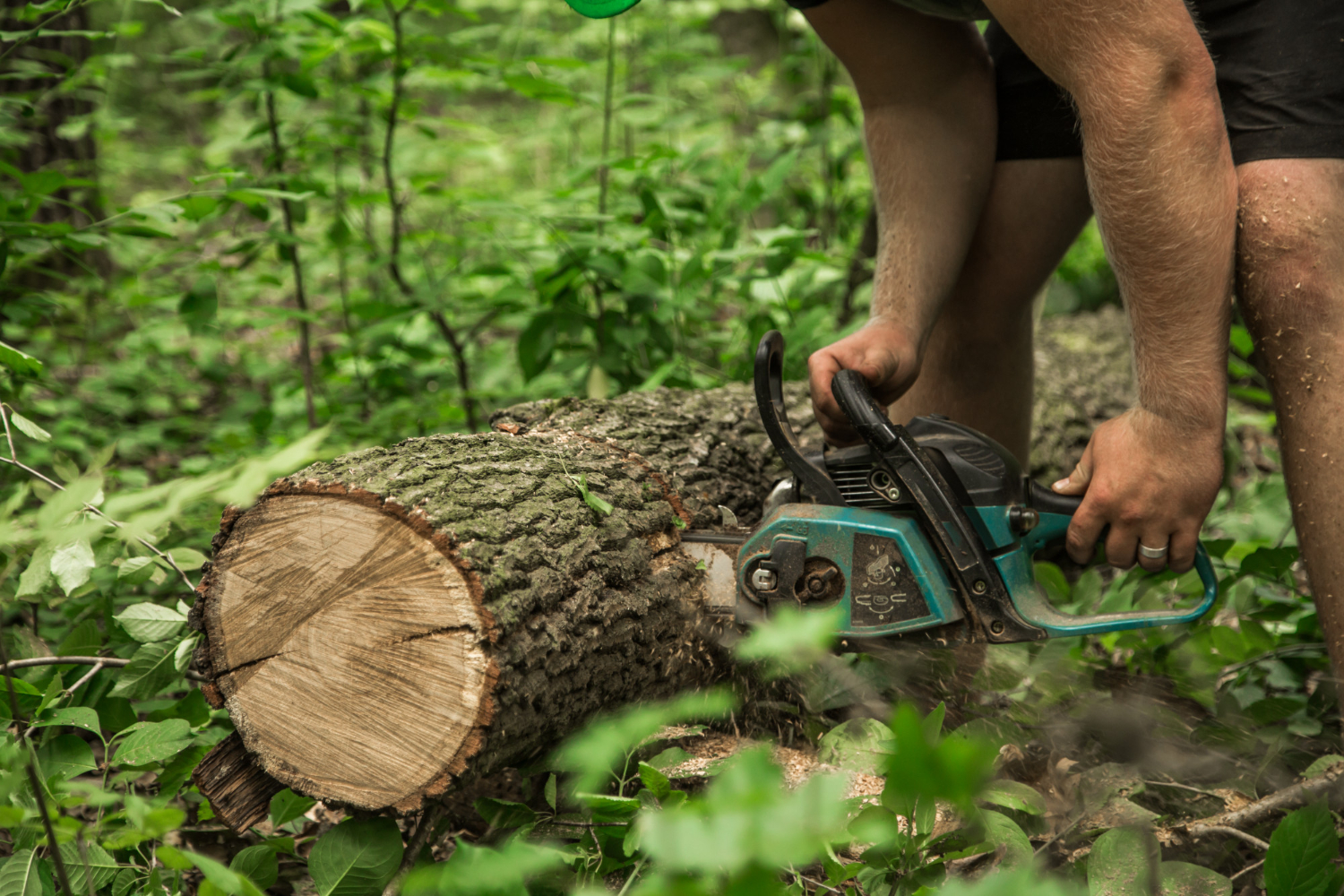
Whatever suits you, and there are real trade-offs. Hauling everything away is cleanest and costs the most. Chipping on site gives you mulch, which is genuinely useful spread thinly around other trees — but never piled against a trunk, which traps moisture at the collar and invites decay exactly where you least want it. Leaving rounds for firewood is fine if it is hardwood and you can season it, though pine burns fast, resinously and is not much use for a stove.
Are you set up for difficult lakefront removals?
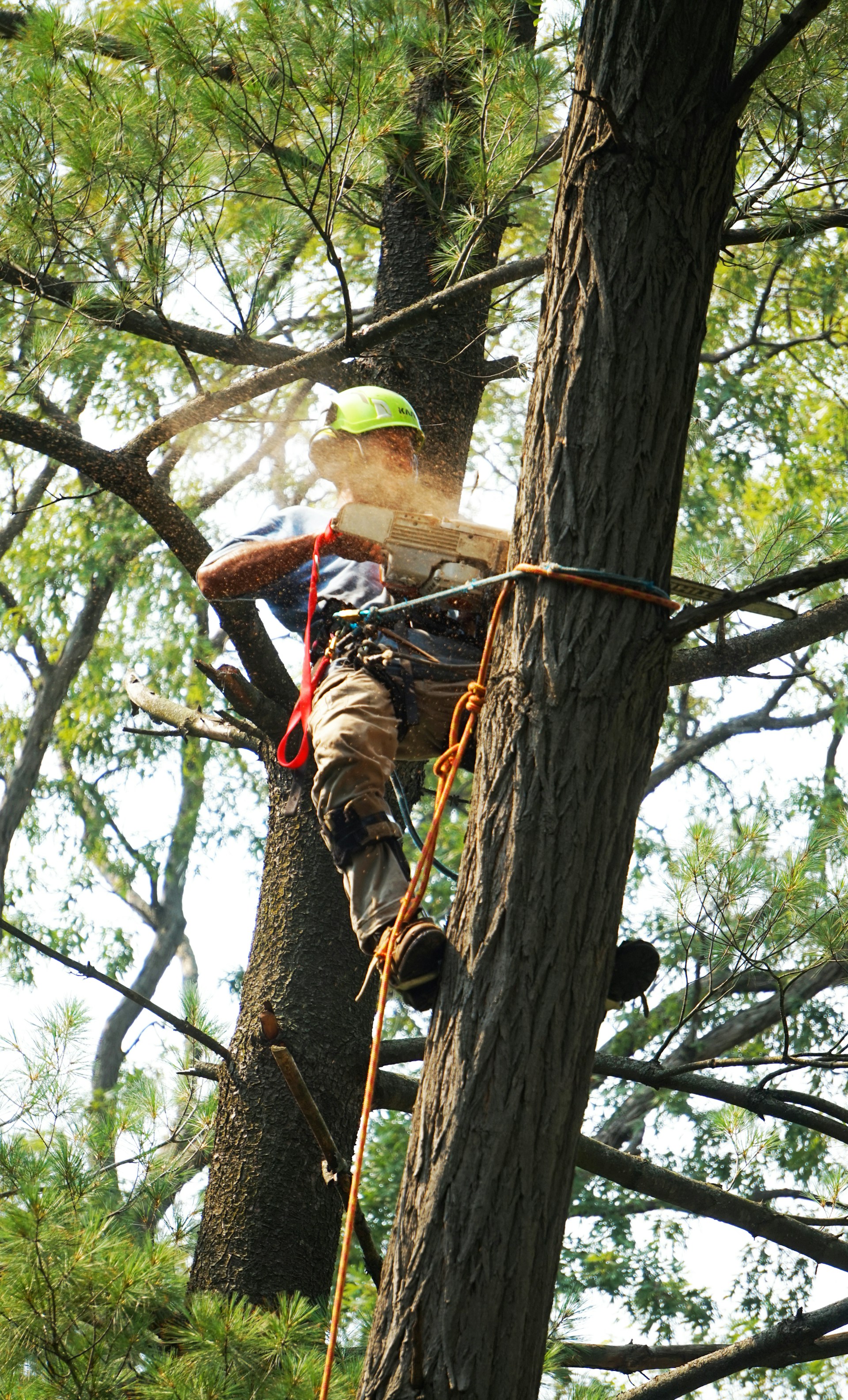
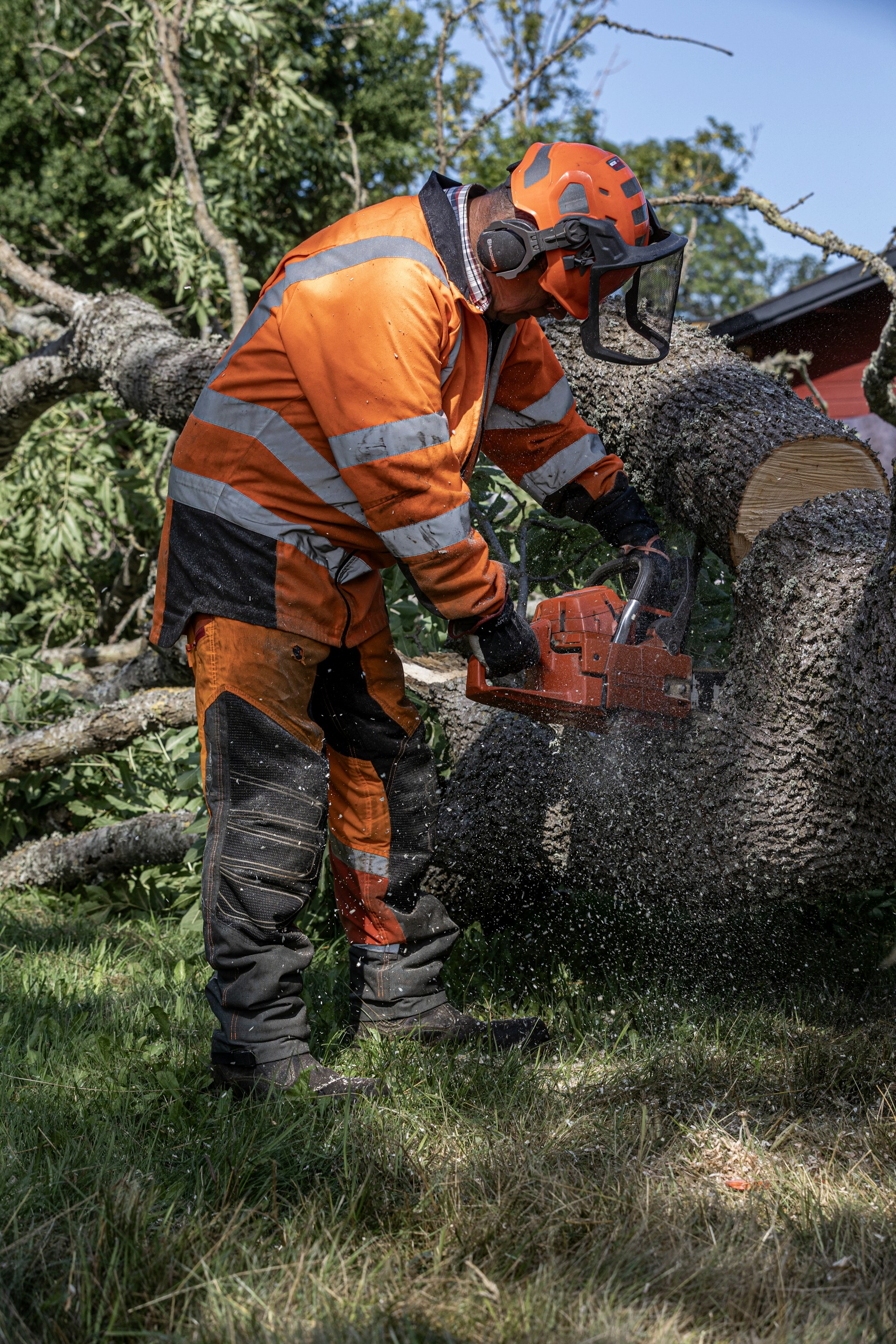
Yes — steep ground and no drop zone is normal work for us. We own our equipment including the crane, so sections can be lifted out rather than dropped where there is nowhere to put them. R & R has been family-run in North Georgia since 1987, is licensed and insured and a member of the Tree Care Industry Association, and never subcontracts. Free estimates on site; emergency cover 24/7 on (678) 482-9994.