
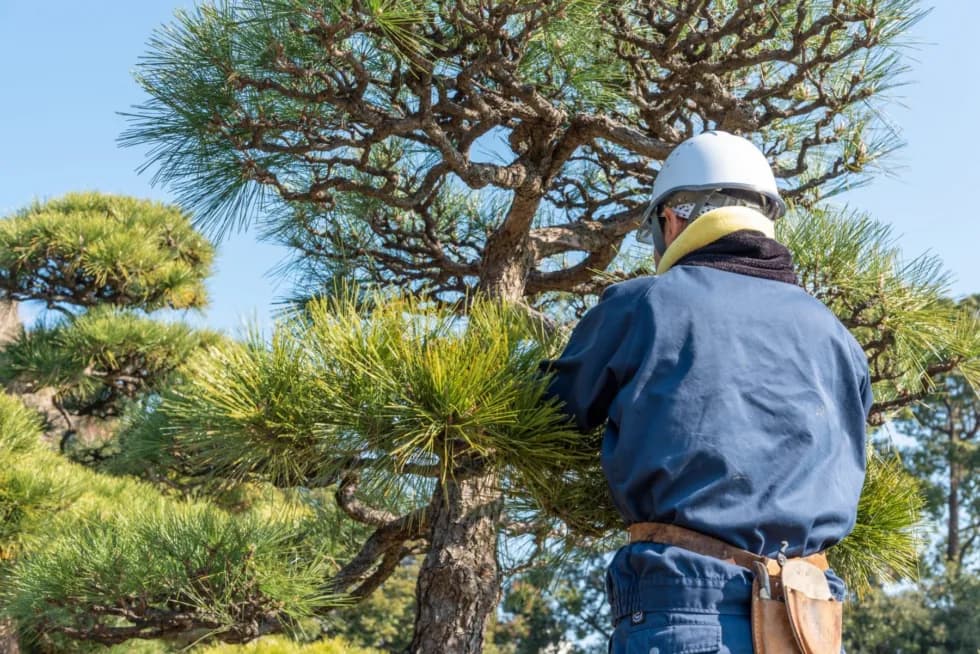
How To Trim a Pine Tree: 5 Easy Tips
Quick answer: trim pine trees in the cold months — October through late winter — make every cut just outside the branch collar, remove only dead, damaged, or hazardous limbs, and never top a pine. Pines don't resprout from old wood the way hardwoods do, so every cut is permanent. In Georgia there's one more rule the generic guides skip: fresh cuts in warm weather can attract pine bark beetles.
- Best window in North Georgia: roughly October–January, while the tree is dormant and beetles aren't flying.
- Never top a pine — it won't grow back from the cut and the tree is permanently disfigured or dies.
- Warm-season cuts invite pine bark beetles, including the southern pine beetle — Georgia's most destructive forest pest.
- Dead lower limbs can come off any time — pines shed them naturally as they grow.
- Within 10 feet of a power line, stop — that's never a homeowner job.
Loblolly, shortleaf, and white pines tower over yards across Buford, Suwanee, and the rest of North Georgia, and most of them need far less trimming than homeowners think. Here's how to do the small jobs right — and how to recognize the jobs that aren't small.
When should you trim a pine tree in Georgia?
In the cold months. University of California forestry advisors put it plainly: pruning pines is best done in the coldest months of the year — and the same logic holds harder in the South. Pruning wounds bleed resin, and that fresh resin scent is exactly what draws bark beetles during their active warm-season flights. UGA Extension's southern pine beetle guidance warns Georgia homeowners that stressed and wounded pines are the trees these beetles find first.
So: schedule routine pine trimming between October and late January. The exception is a broken, hanging, or dead limb over a driveway, roof, or play area — that's a hazard, and hazards come off the day you find them, in any season.
Why can't you top a pine?
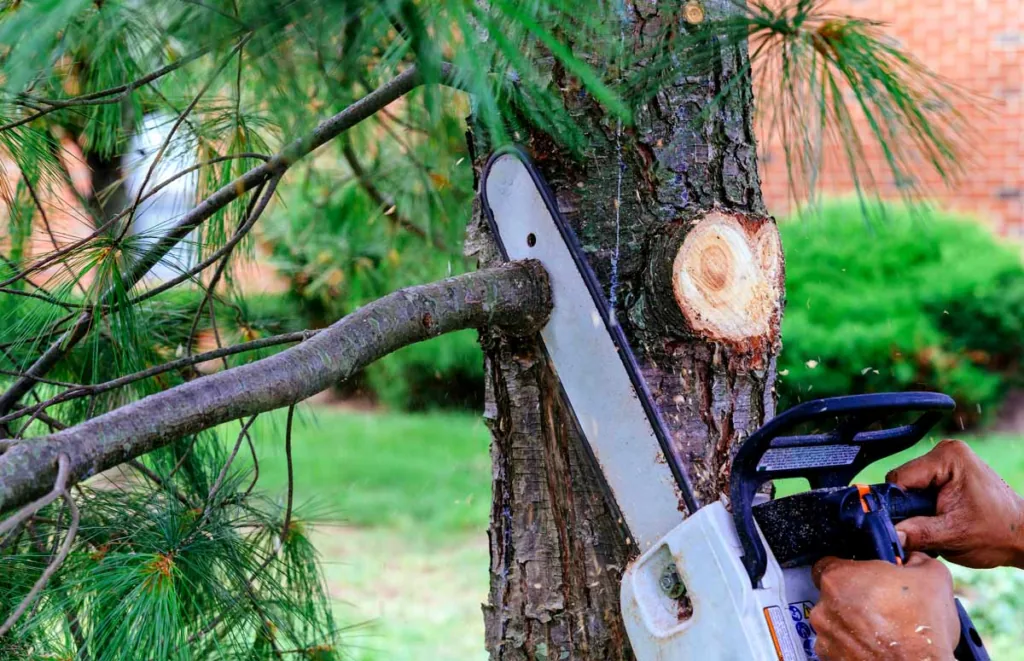
Because it never recovers. Hardwoods can push new shoots from old wood; pines generally can't. Cut the top out of a pine and you get a permanently flat-headed tree with a dead leader, an open highway for decay, and a structure that gets more dangerous — not shorter — as the years pass. If a pine is genuinely too tall for its spot, the honest options are crown-raising the lower limbs, or removal and replanting something that fits.
The five tips
1. Start with a slow walk-around
Look for dead limbs (no needles), broken stubs, limbs rubbing the roof or each other, and anything hanging. That short list is your whole job. A healthy pine's shape needs no improving — the goal is subtraction of problems, not styling.
2. Cut at the branch collar — not flush, not a stub
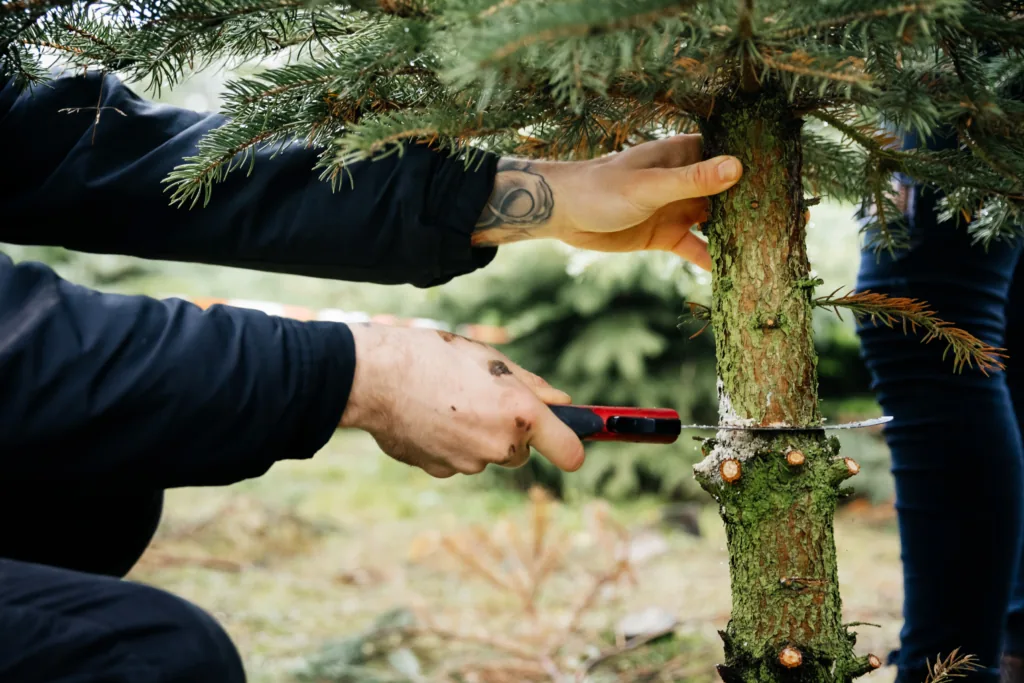
The collar is the swollen ring where the branch meets the trunk. Cut just outside it: the tree seals fastest there. Flush cuts remove the tree's own defense zone; long stubs die back and invite decay.
3. Use the three-cut method on anything heavier than your arm
First an undercut a foot out from the trunk, then a top cut a little further out to drop the limb without tearing bark, then the finishing cut at the collar. Skipping this is how a 40-pound limb strips a six-foot ribbon of bark off the trunk on its way down.
4. Take the dead lower limbs — sparingly on live ones
Pines self-prune: as the crown climbs, lower limbs die and drop. Removing dead lower limbs is safe housekeeping in any season. Live limbs are a different matter — keep the living crown intact wherever you can, and never strip so many lower branches that the tree becomes a bare pole with a tuft on top.
5. Match the tool to the limb — and stay off the ladder for the big stuff
Bypass pruners to about half an inch, loppers to an inch and a half, a pruning saw beyond that. The moment a job needs a chainsaw above shoulder height, or a ladder leaned against the tree itself, it has stopped being a DIY job — that's how most homeowner pruning injuries happen.
Which pine do you have — and does it change the trimming?
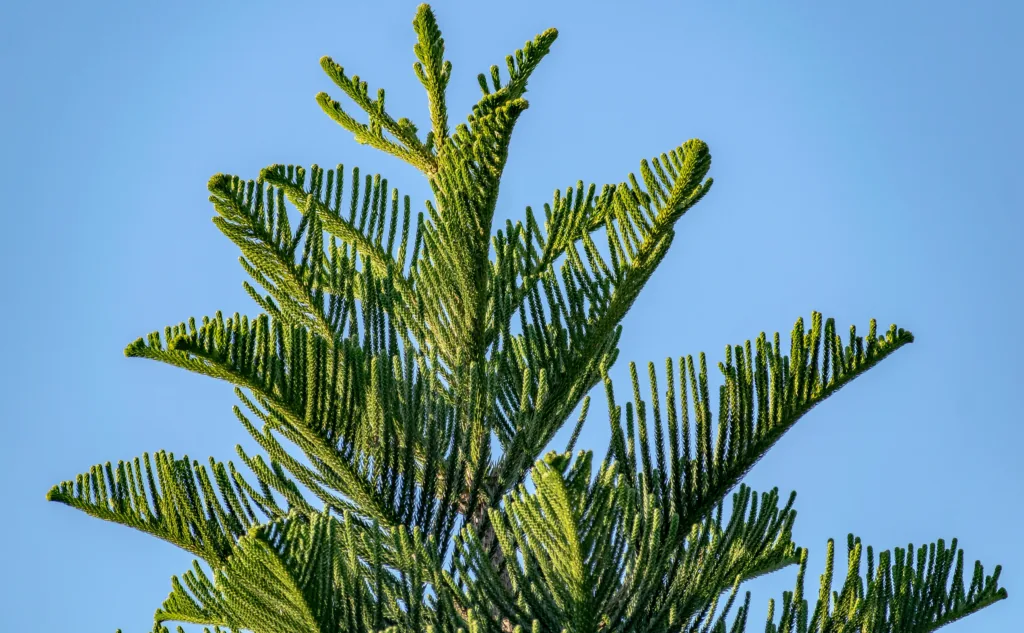
It does. Loblolly pine — the tall, fast one that dominates North Georgia subdivisions — self-prunes aggressively: its lower limbs die in shade and drop on their own, so most of what it needs is deadwood cleanup and clearance. Shortleaf pine is similar but slower and tougher. Eastern white pine, the soft-needled one that holds branches to the ground, is the only common yard pine that genuinely takes shaping — and even there, light hands win. If your "pine" has flat, scale-like needles it may be a cedar or cypress — different rules, worth a photo before anyone cuts.
When is pine trimming a professional job?
Height, power lines, and lean. Mature loblollies in our area commonly pass 80 feet — nothing on that tree is reachable safely from a ladder. Anything within 10 feet of a power line is off-limits entirely; assume every line is live and report tree contact to the utility. And a pine that has started to lean after a storm needs an assessment, not a trim — see our guide to dangerous tree warning signs.
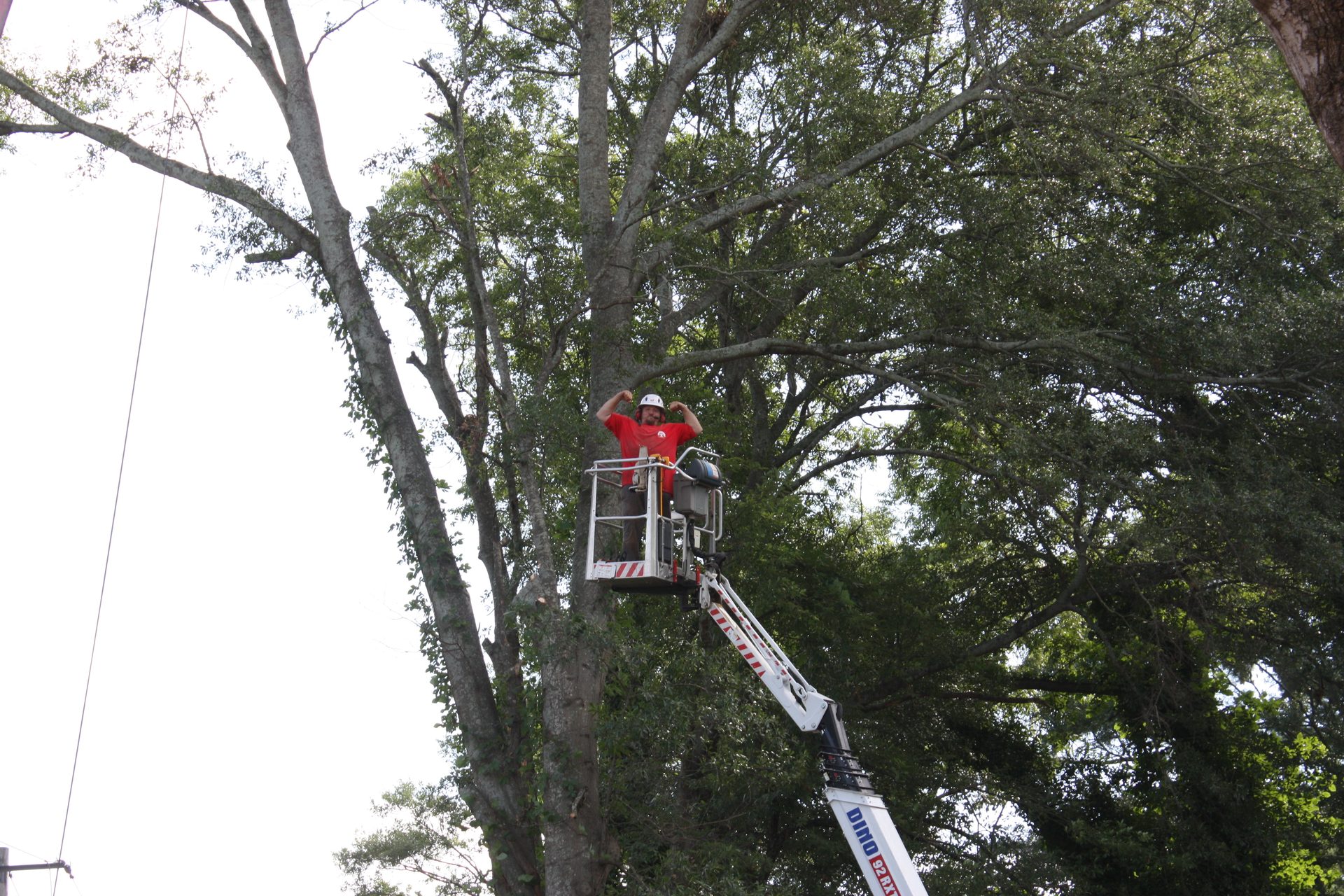
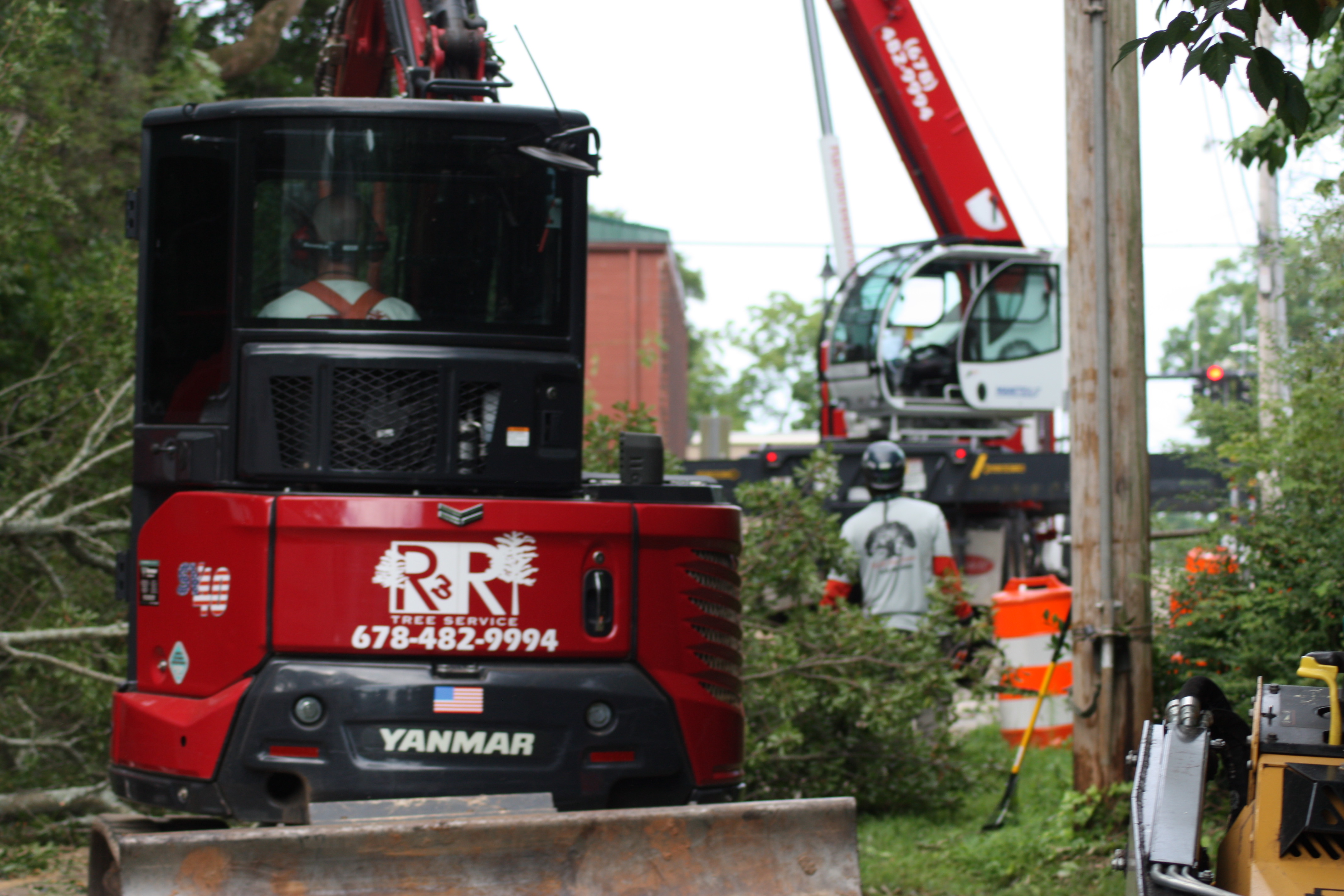
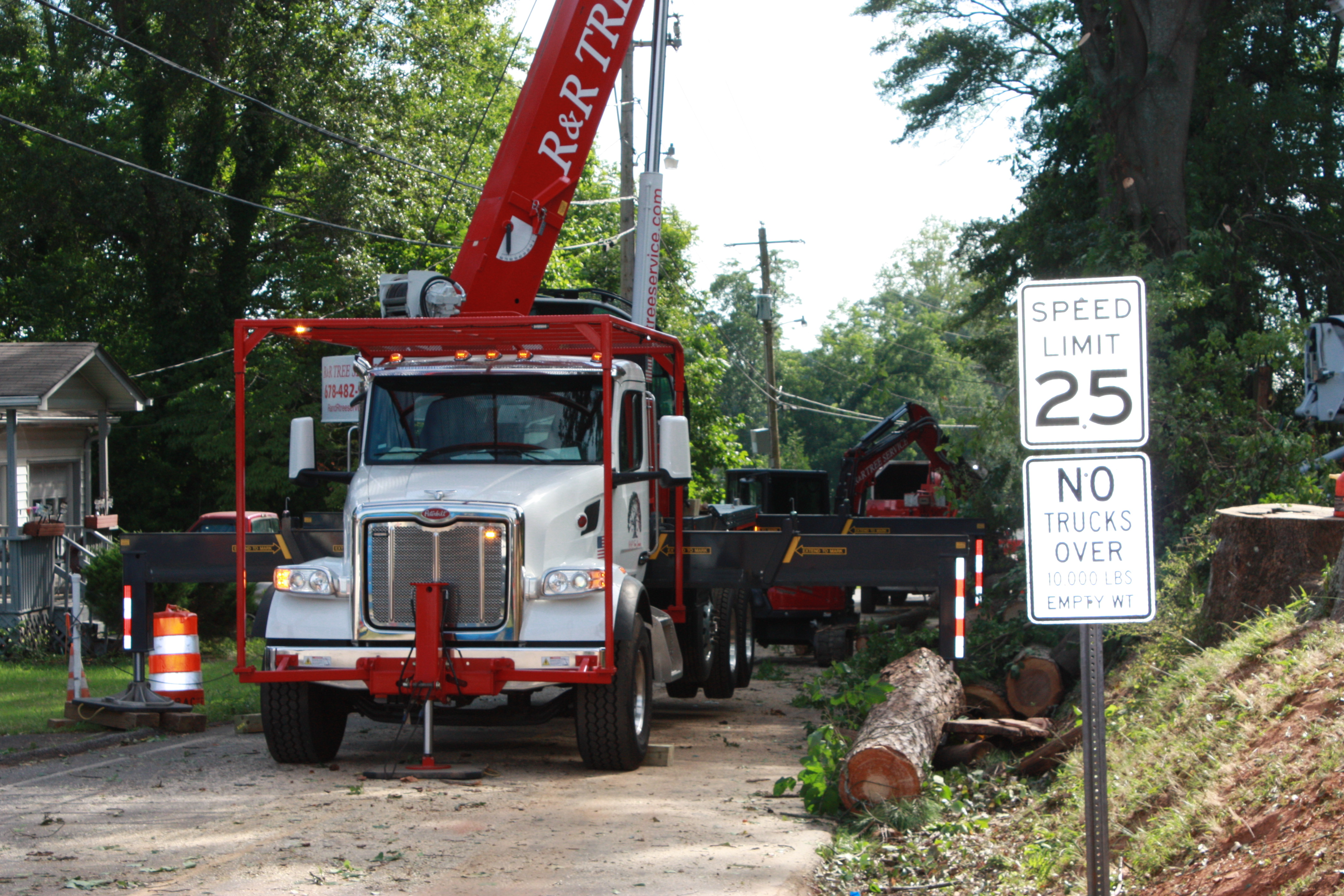
Our crew trims pines across North Georgia with our own bucket trucks and rigging — and when a pine is past saving, the same team handles emergency work and crane removals on tight lots.
Frequently asked questions
Can I trim a pine tree in summer?
Only if it's a genuine hazard limb. Routine summer trimming wounds the tree during peak beetle flight in Georgia, and resin from fresh cuts helps beetles find it. Wait for the cold months.
Will trimmed pine branches grow back?
No — pines don't regrow branches from old wood. That's why each cut should have a reason, and why topping is never an option.
How much of a pine can be trimmed at once?
As little as possible. Dead wood is free; with live growth, stay conservative — a pine that loses a large share of its living crown in one season is a stressed pine, and stressed pines are beetle targets.
Why is my pine dripping sap after trimming?
Resin flow at a fresh cut is normal and it's the tree's own sealant. Don't paint or tar the cut — trees compartmentalize wounds on their own.
Who trims pine trees near me in Buford?
We do — R & R Tree Service has trimmed and removed North Georgia pines since 1987, family-owned, licensed and insured, with our own equipment. Free estimates: (678) 482-9994.
Get the tall pines handled safely
Walk your yard, list what's dead or hanging, and send us a photo — you'll get an honest read on what's a quick trim, what should wait for winter, and what needs a bucket truck. Free, no-obligation estimates from our tree trimming crew — R & R Tree Service, (678) 482-9994.
 Call (678) 482-9994